


The Back Pain Myths Making Recovery Harder (Part 1)


In this episode, Dr. Jim Eubanks, physiatrist and spine specialist, breaks down the most harmful back pain myths patients encounter online-and what clinicians can say instead. If you've ever struggled to help a patient move past catastrophic thinking or scary MRI language, this conversation will give you the tools to reframe pain, imaging, and recovery.
What you'll learn:
- Why "pain equals damage" keeps patients stuck in fear and avoidance
- How to translate radiology reports into plain language that empowers movement
- When imaging is actually necessary (and when it's not)
- The role of lifestyle, sleep, stress, and psychological factors in back pain recovery
- Why rehabilitation should almost always come first-even before imaging
This is part one of a two-part series. Part two dives into first-line care, injections, procedures, and when to involve a specialist.
💬 Join Modern Pain Pro for mentorship, case discussions, and clinical resources → modernpaincare.com
📘 Learn about Pain Practice OS → Our flagship program for clinicians building local pain programs
Your work matters-let's build modern pain care together.
#BackPain #PhysicalTherapy #ChronicPain #PainScience #Physiatry #RehabFirst
*********************************************************************
📸 - Follow us on Instagram - https://www.instagram.com/modernpaincare/
🐦 - Follow us on Twitter - https://www.twitter.com/modernpaincare/
🎙️ - Listen to our Podcast - https://www.modernpaincare.com
____________________________________
Modern Pain Care is a company dedicated to spreading evidence-based and person-centered information about pain, prevention, and overall fitness and wellness
Eubanks Episode 1
Jim Eubanks: [00:00:00] So most people do not need surgery for back pain. There is also this idea that imaging tells us what's wrong, or imaging always aligns with our symptoms, and that's not the case. There is understandably this idea that pain equals damage, which in many cases of back pain it does not.
Mark Kargela: If you're frustrated, confused, or even scared about your back pain, especially after reading an MRI report or searching online, you're not alone.
This is part one of a two-part conversation with Dr. Jim Eubanks, a physiatrist and spine specialist who's here to clarify what most back pain really means and what it doesn't.
You'll learn why pain doesn't always equal damage, what imaging can and can't tell us, and when you actually need to seek more care. We'll also explore how stress, fear, and lifestyle factors shape your recovery and how to move forward confidently with the right support.
Whether you're a clinician helping others, or someone dealing with back pain yourself. This episode lays a clear and hopeful foundation. Let's get started.
This is the Modern Pain Podcast with Mark.
Jim, as [00:01:00] you know, the world of online, and it's one of those things as a clinician that can be challenging, right? Where we have a lot of well-meaning people, I think, but then putting some information that makes it hard for us as clinicians. Very scary information, very difficult information out there that makes it hard for somebody to wanna move forward and get into movement and get into active management strategies.
I'm wondering what you see in your practice with the world of online information around back pain. 'cause especially around back pain, I think it's one of the more challenging areas we face as healthcare professionals. Trying to help people get information that is gonna help them move positively forward.
Jim Eubanks: So we're in this interesting AI age now, right? AI has emerged and initially I think we had problems with hallucinations and information that maybe was not cited from evidence-based sources, but just general gestalt of the internet. So a lot of patients impressively right, are looking to educate themselves. And so they [00:02:00] will search online for information about what they have going on with them, their symptoms, and it's really important that they're able to access high quality, reputable information. And so that's the backdrop of all of this. It's good that patients want to learn more. They want to know what they can do for themselves. And I think when to seek help. And so we have to make sure that good guidance is given when it comes to accessing that. There's a lot of potential pitfalls. There is every opinion available to society online right now. And so I think from an initial standpoint, people need to know the most fundamental realities of back pain, which is that it's very common. Most adults experience it at some point. It's rarely dangerous, and it often improves [00:03:00] even if it recurs. So a lot of chronic back pain, for example, is really a relapsing remitting condition for people. But it's important for them to know that if it comes back, it's not always and usually not associated with new damage or new injury. And that's the foundation that I think we want to work from. There are always exceptions and figuring that information out and knowing when to seek care is a necessary step along the way. So I think from my standpoint we have to know what are those cases where seeking professional guidance is necessary. We want people to understand how to align what they're experiencing with the right kinds of information, and then ultimately through that, guide them towards evidence-based, evidenced, sort of informed, driven, non-invasive care first. And so that's the. [00:04:00] Background for this. I think
Mark Kargela: I am wondering if you could share some of the challenging, maybe narratives you see out there around back pain online that sometimes make it hard for someone to, again, move forward in a way that best aligns with their symptoms and best aligns with best practice.
Jim Eubanks: That's really important. So, so some of the online myths, if you will, or the common myths that people have is that, you know, my back pain needs fixing, right? Like a structural intervention. And so
surgery often comes up as a concern quickly or too quickly for a lot of people, and that's not the case.
So most people do not need surgery for back pain. There is also this idea that imaging tells us what's wrong, or imaging always aligns with our symptoms, and that's not the case. There is understandably this idea that pain equals damage, which in many cases of back pain it does not. I think that there is often a persistent [00:05:00] lack of awareness of lifestyle factors and there influence in how we experience or improve when we have back pain.
And so ta so understanding those factors, a very bad night's sleep can make the back pain experience less pleasant and e even more so than it would be otherwise. And again, I think that the understanding that flare-ups or exacerbations can be common and expected and that those moments don't indicate. In many cases a structural worsening of symptoms. So that's some of what I would propose are common ideas that are not accurate and potentially more harmful for people. Yeah.
Mark Kargela: One of the things I see clinically, and I know colleagues speaking with them see a bit, is just some of the scary terminology that shows up on radiology reports. And I know our radiology colleagues [00:06:00] are, you know, doing some great work and have all great intentions. And there's some, been some studies on some of the difficulties with consistency on radiology reports and and pairing some of those radiology reports with like, what we know as the normalcy of that.
I'm wondering if you could kind of maybe knock down some of the common ones that sometimes get our scary sounding, understandably for the people that are experiencing back pain. ' cause when we're experiencing such a distressing experience, I can relate. I've had a herniated disc where, you know, I had my wife tie in my shoes and I was taking 15 to 20 minutes to get outta bed in the morning.
A lot of people can share some of that stuff, but then when you pair it up with some scary sounding diagnoses on.
Jim Eubanks: Mm-hmm.
Mark Kargela: Film on imaging reports. It's, it can really like, oh my gosh. And really take something that may be with what we know from a, the science of pain and science of some of the, what structural things are more meaningful and less meaningful in somebody's back pain experience.
I'm wondering if you could speak to maybe some of the ones, I guess some of the ones that come to mind for me are, [00:07:00] spondylosis or arthritic change in the spine. Disc pathology, the bulging disc is probably one of the more common ones that sounds scary and something, but I'm wondering if maybe you could speak to those in anything else you think would be worth people hearing some of the real stories behind these findings versus some of the scary things that sometimes gets pushed out there on the, on online forums.
Jim Eubanks: So most of these things do fall under the general category of spinal osteoarthritis or spondylosis. Okay. Age related changes that occur. So I really emphasize to folks that when it comes to radiology reports, the radiologist is tasked with describing everything they see right in, in, in advanced medical terminology. And there are litigious reasons for that. There are potential interventional reasons for that if a patient does end up needing something done. But generally speaking, there's a lot of as one of my mentors used to say, gobbly goot. On, on the [00:08:00] reports that confuse patients. So one of them is disc herniation or disc bulges which can be benign and normal changes with aging that are not impacting the symptom experience. With a patient's spine, there is facet arthropathy, which is just facet joint arthritis or changes to the joint due to aging of osteoarthritis. There is stenosis of course, which means narrowing, and sometimes there's radiologic stenosis that is asymptomatic and that can be frequent. And so patients will see these terms.
Another big one of course is degenerative disc disease. And they sound scary. And I have patients who will, nowadays what happens is that most patients have immediate access to their reports that are uploaded into [00:09:00] MyChart or whatever electronic health record system they're using. And they read this and they hear everything and it sounds scary. And so most of the time, however, there might be just a few things in there or none at all that are pertinent to their symptoms. And that's where having a skilled clinician who can go through the radiologic imaging with the patient and explain what's relevant to them and what's normal for them for their age and the expected changes that we might see. I am very deliberate about not using most of those terms when I am explaining the issue to patients. So I try to use plain language in ways that they'll understand. I have this phrase that I use often, which is for my older patients that we trade arthritis for wisdom, and they usually get a good laugh out of that.
[00:10:00] But the point is we need to break down what is relevant and what is not relevant and what is normal change. And so that's how I spend most of my time. You know, I'm a pm and r physical medicine and rehabilitation physician or physiatrist. We are not surgeons. We do some interventions. We do a lot of medical management and sort of rehabilitation optimization. Diagnostic workups. And so it's a big responsibility of people like me as well as others who deliver spine care to align imaging when imaging is necessary for the patient with their experience in a way that informs next steps or care. And that's the priority. I try to answer those questions in a way that also provides enough reassurance to the patients so that they don't feel there is this looming danger inside of them, [00:11:00] which is very problematic to making progress with whatever treatment plans we come up with. Yeah.
Mark Kargela: I'm wondering if you can speak to the question and the common issue that, especially as a rehab practitioner, as a physical therapist, some people are very hesitant to start physical therapy until they have and of course there's a right time for imaging even sometimes early on. I'm wondering if you can speak to how you would advise somebody of when imaging's necessary to move forward versus, you know, moving forward conservatively without imaging.
Jim Eubanks: So, you know, maybe now is a good time to just talk about the major red flags. So these are the things that are concerning, that comprise a very small number of symptoms, but suggest that there's something else going on that needs additional workup. Again, most people do not have this. So progressive neurological deficits that is worsening motor weakness dysfunction of bowel and bladder, that's new or different. And you know, [00:12:00] things like concern for inflammatory conditions where you have fever, chills infection a history of cancer or active cancer with non mechanical, which means you can't really reproduce it with movement or pressure or positioning change. And then major trauma. So someone fell off a ladder and now they have back pain. And then there are sort of, population specific concerns. So people who have high risk clinical scenarios for osteoporotic or. Metabolic bone disease and then maybe had a trauma of some sort and now have back pain. So those are the scenarios where we would want to get them to someone for an evaluation first.
Okay. And those are we generally call those red flags. Now, outside of that, it's almost always appropriate to start physical therapy and that's the majority of [00:13:00] cases. I see a lot of folks who come into my clinic and say they wanted to be evaluated first, or they're referring physician wanted them to be evaluated first. And then I give them the talk about the benefits of rehabilitation through physical therapy that optimize them to do better. That includes almost anything else that we might decide is good or necessary for them. Diag additional imaging additional diagnostic laboratory workup. The need to perhaps add in most cases short term medications to help control their symptoms more potential interventions.
So folks benefit from rehab because it does things for us that nothing else does. So there's no medication injection surgery that can do what rehabilitation does [00:14:00] for the body, which is stimulated to optimize general musculoskeletal and neurological health in ways that set the patient up better for success. And so that's a big part of my framing with patients who come in to see me for the first time and contextualizes. Why I will often get them into PT immediately and continue it at different points of care or modify the recommendations based on new information we might learn, which can happen and often does.
And so perhaps once we get some additional information, it might change what we focus on together and with the therapy team. But starting the rehabilitation process is rarely something that requires additional workup before we do it, unless those red flags are present.
Mark Kargela: That can be so helpful for folks and [00:15:00] such a distressing situation when back pain can be so debilitating where sometimes it makes us feel like, oh my God, something has to be catastrophically wrong and it's hard for patients. But getting in contact with physicians like you and health and professionals who can really lay out the information of why we don't probably need imaging.
'cause here's the serious things, validate like you've mentioned as far as really keeping things in the patient's language and validating what they're going through and then giving them a plan to go forward. Now with that said, there are a lot of people proposing plans out there online for people and solutions to, back pain.
I'm wondering if you can help, and there's clinicians and people in pain listening probably. How do people kind of determine good advice from. Maybe hype or things that aren't necessarily in line with best guideline practice and what we know about, you know, the best way we can manage back pain.
Jim Eubanks: So generally speaking, what we want to look for are some core principles. And that [00:16:00] is. Encouraging movement early and often. Some people who might have higher impact, pain or higher levels of pain need a graded approach, graded progression which means, you know, starting off low and slow and then building up to tolerance.
And that's okay, but it's just a modifying consideration. It's not an exclusion of the need to go ahead and start doing things. We want to embrace approaches that acknowledge the lifestyle factors. So the importance of good diet, sleep recovery principles general stress management, reassurance and really a take home point for online information is that it emphasizes self-efficacy. Not that there is some externally applied process or intervention that is going to solve all of the problem, right? [00:17:00] Anything that gives the insinuation of a secret cure or the ability to provide you information that other people don't have or that sort of feed this idea of hidden knowledge as we might call it is generally wrong information or inaccurate and sort of exploitative in many ways, right?
So they're exploiting that vulnerability of the moment to drive some other paid for. Approach. I mean, that's really what it is. But the really good guidance and information is something that we all should know and embrace. The, we also want transparency. So any information that's available online that we should be able to trust should have references and resources that are vetted and have been published in the [00:18:00] literature and discussed amongst experts.
And that is something that I think increasingly we're seeing more focus on, which is a good thing. And generally speaking, the guidance should match some of our guidelines that, that are produced for. Back pain. There are many different guidelines, so World Health Organization nice. In the uk we have guidelines from our various medical and physical therapy academies that are put out in the literature here in the us And so if something is online that sort of grinds against what those general guidelines are saying, I think that's a reason to pause and look elsewhere.
Mark Kargela: Yeah, totally agree with that. It, there's some, any overly simplistic solution to sometimes a complex scenario, it often is too good to be true [00:19:00] and a lot of people who are looking maybe to monetarily profit off of a of that promise, which, yeah, can be very frustrating. One, one thing I wanted to get into a bit, 'cause I, it's, there's the physical recovery that patients need to undergo with back pain and I one I hear you spoken about and utilize as far as how you prescribe and recommend things for people and experience back pain.
There's a psychological recovery. We're seeing kinesia phobia catastrophic thinking or thinking like the worst case scenario around what's going on in your back. We're seeing just general fear. And different things. We have the whole fear of avoidance model around back pain. I think it's important 'cause I still think there's a little bit of a tendency in healthcare to take them, well this is a body problem, why would I monkey with my mind?
Yet injury comes with fearful with anybody and I can definitely relate to, with mine, thoughts, beliefs, and behaviors that may move somebody further away from recovery or better towards recovery. I'm wondering how you can, if you could speak to a little bit of where you see kind of mind body approaches or more [00:20:00] psychologically informed approaches fitting in the management of somebody with back pain.
Jim Eubanks: We bring in to the experience of back pain, everything that was happening before that moment, right? Some folks have more anxiety just as a baseline. They might have more of a depression affect. They may have very complicated or challenging life circumstances that are going on. And so then overlay back pain and those things tend to be magnified. They tend to obstruct progress. It's really important that we identify that and address it with the right support the right psychological support, sometimes the right medication support. But people experience pain. And psychological sociologically challenging you know, social determinants of health circumstances that happen concurrently. And that's what I think is a very [00:21:00] common experience. And one that we cannot break those things apart because they are occurring together in a way that negatively impacts the other. It is probably the case that for many people, if you have a lot of anxiety or depression or complex social circumstances, that it's more difficult to recover using basic strategies and you might need some additional supports in place. And I think it's important to not blame the back pain on those prior circumstances. But at the same time, we cannot, as the clinicians ignore them or say that's not my domain. So I can't help with that. We have to figure out a way to get the right treatment and support together for a comprehensive care plan that's going to give the best chance of success for [00:22:00] the person. And that is what a lot of us acknowledge when we talk about bio-psychosocial frameworks or models. We acknowledge that and all of us across the spectrum of spine care. I think in 2025, for the most part, acknowledge the existence of that. But not many of us are great at working through what the application of that means for the patient that we see. Because the skills required to do that well are often not trained in a formal setting. Or often we are trained in a way that prioritizes one avenue of a more complete piece of care. And so that's why I am, I'm really a strong advocate of working in team settings and having partnerships and knowing who you can lean on within your clinical setting or [00:23:00] institution to help you put together all of those supportive resources for the patient. So I have developed sort of a network. Physical therapist, for example, who worked really well with my approach and can provide nuanced care that matches the needs of the patient. I have some pain psychologists at my institution that we work with and I work with to help provide some more support for patients that have an affective overlay or additional needs that have to be addressed along the way. There are some places, like large academic institutions have means of addressing to different degrees, those social determinants and for example, transportation, the ability to have access to housing and food. If those things aren't [00:24:00] available, they can really hinder or prevent progress in ways that we might otherwise expect. And so applying the guidelines it's a great place to start, but sometimes that's where a skilled clinician comes in because you have to take the guidelines and then ask the question, what is needed to actually ensure that this can work for the patient in front of me? And that's where the larger umbrella comes in. So hopefully that makes sense.
Mark Kargela: I love how you spoke to the social determinants of health and I think we're better being able to see how this impacts our biology, right? I think there's been this probably thought like these are just factors of my life. How does this affect my back? And I think there's like, for instance, metabolic health or blood sugar and cholesterol and various things around which often has to do with our diet, our exercise, our access to food.
You know, when housing's a difficult thing and transportation is a massively [00:25:00] stressful thing. We know when our body's under perpetual stress it. Really cranks out a lot of pro-inflammatory things. We've seen a lot of that around arthritic research that, you know, when we don't have a good ecosystem around us, which is our lifestyle it can really have a negative impact on our biology.
I wonder if you could speak to a little bit of that around back pain of, like, you, you've already mentioned a few things, but like how you look at that whole lifestyle piece and helping people connect it to their biology. 'cause I still think sometimes being on diet and exercise, I don't really get it.
But especially like the diet and some of the stress management things I think are maybe poorly understood by the public. And it's probably on us because we haven't messaged it well to get, to connect it to, like, this isn't just something that lives in your life. It you imprint it, you embody it in your biology.
I wondering if you could speak to a little bit of how you kind of use that in your practice.
Jim Eubanks: Right. So you're exactly right. Our baseline metabolic state is highly relevant to our experience of back pain and what's going on with us. So someone who has [00:26:00] osteoarthritis and is ideal body weight, getting enough sleep, exercising, has a healthy social circle. Even if they. Having a similar kind of osteoarthritis experience, they generally do better than patients who are missing big parts of those things. And that is because everything that we do as embedded biological creatures that we are is affected by our general health. Sometimes we have an autoimmune or inflammatory condition that may be undiagnosed and diagnosing that is necessary. We may have uncontrolled diabetes. And so I will, as a matter of my approach to practice, make sure that I have enough understanding of someone's baseline health to determine [00:27:00] how far I can go. Before needing to take a step back and address those things or get more information so that we're not missing something major. This is sleep is increasingly understood to have a negative impact, not just on our ability to recover from things like back pain, but health in general. It can perpetuate worsening health status if we're not getting restorative sleep. And diet is another major aspect here. Both excess of the wrong things that we're consuming as well as inadequacies of the right things. And so learning how to. Take a step back and ask those questions and sort of survey the situation for the patient is absolutely necessary. Now, when we convey that to patients it, we often have to break it down and [00:28:00] say, you know, your general health is the best predictor about how you are going to be doing five years, 10 years from now. Right? And I tell folks that there is this sort of arc that can happen over the next five years. Usually I say, you, you know, your health state can kind of do this, or your health state can do this. So we can drop off very rapidly from decent health if we're not doing the right things, especially in the context of aging. And that's where, for me, really getting a handle on adiposity or obesity. And in general context where we have to really get a good handle on health promoting lifestyle factors we have to understand people who are at high risk of having certain negative health states, for example metabolic bone disease or age related demineralization, [00:29:00] osteopenia, osteoporosis. The reason being that if someone is in the age where they're at higher risk of losing bone mass and they have a benign fall, right? That can be the reason that they fall off the cliff, so to speak of an otherwise healthy state. We have to anticipate. Issues that can arise. And so communicating that to a patient really involves helping them in a very small amount of time if they don't have that background to understand that all of these factors create a summation of health for them and that it, you know, it's a bit like the legs on a stool. If two of those legs and a three legged stool are strong and stable, it doesn't matter if there's one missing, you cannot sit on that stool. [00:30:00] Right. And that usually clicks when we start to talk about things in that way. For people that have the background and maybe just did not translate it to the experience of back pain. That's a different kind of conversation and usually it clicks once you bring it up and just sort of mention that. But I do talk about the research and what it tells us. I'm not citing author names and journals specifically to them. Although, you know, occasionally I might. But the point is to let them know and help them understand that there are entire teams of researchers and medical scientists who are devoted to studying and understanding all of these factors and the role that they play. And that information is what ultimately gives us the best opportunity to help them see their way out of this. And so you, you know, I think [00:31:00] really trying to break things down into plain language is the core of it. And there are many different metaphors we can use for that, but that would be a general strategy there. Yeah, it, you know, one last thing I would say is that I always try to identify some specific goals that patients have. For older patients, it might be, and frequently is that they want to keep up with their grandchildren. They want the ability to go to Disney World or whatever the vacation spot is, or the holiday to spend time with their family. And they do not want to be limited in basic function. And so, for others working age adults, it might be their job, it might be their children, their raising It It might be. A hobby, something that they really enjoy. Gardening, for example, biking, outdoors, hiking, whatever it is, we have to try to help them [00:32:00] see the light at the end of the tunnel that is not just about pain because pain is sort of a, an obstacle or hindrance or temporary blockage to the real goals that they have, which is not so much if you dig down the pain part as it is the way of living that's currently impeded by the pain they might be experiencing.
Mark Kargela: Good points. 'cause I think sometimes as physical therapists and rehab folks, we get really caught up on modulating the pain, modulating pain, which again, has its time and place. But I've seen people make big jumps when they can start seeing their lifestyle coming back, or the things in life of chasing a grandkid.
And maybe sometimes your best pain treatment is to help people see that they're getting their lives back to where they want them to be. And again, not saying we're ignoring pain, but I think sometimes a fixation of laying on a bed and doing passive treatments and not getting people off the table and functionally reengaging in the things that are important to them [00:33:00] can be, you know, we miss a piece if we don't, you know, get off of the table.
Stay tuned for part two where we go even deeper. Dr. Eubanks will walk us through first line care for acute back pain, how to think about hands-on treatment, when to involve a physiatrist, and where procedures like injections or ablations really fit into the recovery plan.
You're not gonna wanna miss it. While you're at it, please consider leaving a review for the show. It helps us grow in rankings and snag you all the best guests possible. We'll see you all in the next episode.
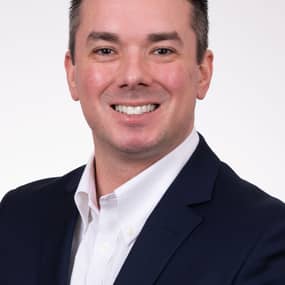
PM&R Physician
Dr. Eubanks is board certified in Physical Medicine and Rehabilitation (PM&R). His clinical practice focuses on the comprehensive care of common and medically complex spine and musculoskeletal disorders using team-based rehabilitation, lifestyle medicine, patient education, non-surgical interventional procedures, advanced imaging and diagnostics, including electrodiagnostics with a focus on optimizing function and health across the lifespan in adult and pediatric populations.
After graduating from Furman University in Greenville, SC, he received his medical degree from Brody School of Medicine at East Carolina University, graduating with Distinction in Research. He completed his residency in PM&R at the University of Pittsburgh Medical Center (UPMC) where he served as academic chief resident. He subsequently completed a fellowship in Value-Based Spine and Musculoskeletal Medicine at UPMC before joining the faculty at MUSC as an Assistant Professor. He maintains an appointment at the University of Pittsburgh School of Medicine as a Clinical Assistant Professor in the Department of PM&R. Dr. Eubanks also has a Master of Science (MS) in sports science and rehabilitation. He is working on a PhD in rehabilitation medicine focusing on Prehabilitation in Spine Surgery at Maastricht University in the Netherlands under supervisor Rob Smeets MD, PhD (Maastricht University), and co-supervisors Michael Schneider, DC, PhD (University of Pittsburgh), and Richard Skolasky, ScD (Johns Hopkins).
Dr. Eubanks has presented nationally and internationally on a n…Read More