


Why Imaging Misses Chronic Pain: Structural vs Physiologic Thinking (Part 2)
Part 2 goes from definitions to implications. Bottom-up pain does not mean “it’s in the tissues.” This episode is a recording of a live interview with pain researcher and clinician Asaf Weissman. If you haven’t watched Part 1, start there—we laid the foundation: why pain semantics matter, how mixed messages harm patients, and why “nothing is wrong with your body” is an overreach. In Part 2, we dig into: What “always bottom up” actually means (and what it doesn’t)Structural paradigm vs pathoph...


Part 2 goes from definitions to implications.
Bottom-up pain does not mean “it’s in the tissues.”
This episode is a recording of a live interview with pain researcher and clinician Asaf Weissman. If you haven’t watched Part 1, start there—we laid the foundation: why pain semantics matter, how mixed messages harm patients, and why “nothing is wrong with your body” is an overreach.
In Part 2, we dig into:
- What “always bottom up” actually means (and what it doesn’t)
- Structural paradigm vs pathophysiology: why imaging often fails us
- Why stress, fear, and emotions are usually modulators, not causes
- Threshold models: when trajectories may (and may not) be changeable
- The case for neuroimmune mechanisms in chronic pain states
- Where diagnostics and biologics may take chronic pain care next
- What role physios may play as case managers and guides
This is the second half of a two-part series. Part 1 builds the framework. Part 2 challenges how we interpret evidence, scope, and clinical uncertainty—while staying anchored to what helps the patient in front of you.
*********************************************************************
📸 - Follow us on Instagram - https://www.instagram.com/modernpaincare/
🐦 - Follow us on Twitter - https://www.twitter.com/modernpaincare/
🎙️ - Listen to our Podcast - https://www.modernpaincare.com
____________________________________
Modern Pain Care is a company dedicated to spreading evidence-based and person-centered information about pain, prevention, and overall fitness and wellness
Why Imaging Misses Chronic Pain: Structural vs Physiologic Thinking (Part 2)
Asaf Weisman: [00:00:00] It's a 19th century legacy that modern medicine still embraces where we expect everything to show up on our macro imaging. We expect the there to be tissue damage that we can see. But then again, as I talked about in the beginning, we already have we have technology that is able to show that there is altered physiology.
Mark Kargela: Welcome back to part two of my live interview with pain researcher and clinician Asaf Weisman. If you haven't listened to part one, I'd recommend starting there first. In part one, we laid the groundwork why pain semantics aren't academic, how mixed messages can harm patients, and why oversimplified explanations, whether structural or psychological can backfire in real clinical life.
In part two, we get into the most misunderstood phrase from this whole discussion. When Asaf says, pain is always bottom up, what does he actually mean and what does he not mean? We'll unpack why bottom up doesn't equal tissue damage.
How altered physiology can drive a chronic pain state without visible injury and where stress and emotions fit as modulators rather than root [00:01:00] causes.
We'll also explore what this could mean for the future. Better diagnostics, more targeted biologics, and a more honest, multidisciplinary approach without losing sight that the person in pain is still a human navigating a complicated life. Alright, let's get into part two with Asaf Weisman
Announcer: This is the Modern Pain Podcast with Mark Kargela.
.
Mark Kargela: When you say always bottom up, I'm wondering if you can clarify that or maybe go into that as far as like, are you saying like, because when people hear bottom up, they're gonna hear it's always coming from the tissues.
I'm wondering what you're, what you not tissues?
Asaf Weisman: No.
Mark Kargela: Okay. Yeah, no, that's,
Asaf Weisman: it's not tissues
again. Look, I just submitted a paper about that. We've been indoctrinated by like we are indoctrinated with a paradigm.
I call it the struc structural paradigm. It's a 19th century legacy that modern medicine still embraces where we expect everything to show up on our macro imaging. Okay? We expect, like, we expect the there to be tissue damage that we can see. But [00:02:00] then again, as I talked about in the beginning, we already have we have technology that is able to show that there is altered physiology.
Okay. Changes pathophysiology, we expect, it's very strange. We expect, pathoanatomy to explain pain and then we, when we don't have pathoanatomy, we say there is nothing wrong. And this is a big problem because we, and again, our technology is, has evolved now, and we have the technologies to show
Asaf Weisman: that there are pathophysiology changes.
For example, epilepsy, what is epilepsy? You don't see any tissue damage in the brain, but you see altered physiology. Okay. It's a change in the physiology of the cells. You know, the heart pacemaker is an electrical component of the heart that can malfunction. It's a pathophysiology, and this is it's accepted.
As real by medicine. [00:03:00] So why doesn't medicine accept that of altered physiology of nociception can lead to a chronic pain state without any tissue damage, like in epilepsy and like in the heart pacemaker malfunction. It's the same thing. Exactly.
Mark Kargela: Understood. Appreciate your your discussion on that.
I got a few questions. I gotta really
Asaf Weisman: think about it. It's like epilepsy is like, there is the most and sometimes what they do in epilepsy they cut down the whole, all the, all the brain tissue that, that is responsible for these altered physiology. Physiology. Although if you look at it at its pathologic it's, it has no changes in anatomy, just changing metabolism.
Okay.
Mark Kargela: Yeah. And so it's, so that's kind of the bottom up you're envisioning of with, you know, this type of stuff with sci susceptive apparatus is there's some. Altered Neurophysiology. Neuroimmunology. Yeah, neuroimmunology. Neuroendocrinology. That's kind of activating the app. Say that
Asaf Weisman: the apparatus is a measurable histological, cellular, and also an anatomical it's [00:04:00] measurable.
It's like in on all these levels, it's measurable. We know it is one functional, coherent unit. And how do we know that from comparative neurobiology? Okay. There are very excellent papers that we cite in our papers about comparative neurobiology, where we see this the, these structure of an apparatus exists throughout all life forms, even trees and mycelium and other things.
It exists there, okay? Mm-hmm. The same mechanism. So, so, and we have to realize that this apparatus is capable. Dysfunctions and malfunctions. This is an important take. And once this the apparatus itself malfunctions, then you can have, you have all these states where we now where some researchers and I tend to agree with them.
They put, again, chronic pain on the autoimmune autoinflammatory spectrum, which is a failure, which are all failures of the [00:05:00] apparatus. And again, there is another there is another misconception where we study the immune system and the nervous system. We study them separately, but we are, we know that they are an integrated, unit, a functionally integrated unit, which gave rise to the field of neuro neuroimmunology.
And 20 years ago when they started realizing, hey. They are inseparable. And I publish, like, I, it's not my, I posted a study, a beautiful study of many case studies where for example, you see people who had nerve lesions and they had psoriasis, and once they got the nerve lesion, the psoriasis completely disappeared on the hand where they had the lesion or people with strokes with psoriasis.
And when they were they, for example, if the lesion was on the right side, they, their whole left side of the body had no psoriasis on it. Okay. It, I it's a very, and it has pictures over there of these, it's a very interesting paper shows. It [00:06:00] shows how they are completely, integral and connected.
Mark Kargela: Yeah. I've got a couple questions. For some people Rachel Hor, that's good questions. Discussed it. Why must we constantly exaggerate the importance of psychosocial issues to pain specifically instead of putting them in the rightful place as just another f factor antagonizing the emotional experience?
I'm, I agree. Yeah, no, I know. I figured that would my question is, 'cause I just see people, you know, I'm, 95% of my day is clinical working with people and my question is always been, I'm all for biologics that can help somebody's pain experience that can help them do this. But I give the example of like, somebody's life has turned into a virtual haunted house with pain because they are in constant distress.
I I question and wonder. If a biologic and we just, we get somebody where a biologic in a medical setting gets them feeling better, yet we drop them into a life where they've lost so much, they have so much distress, they're in so much understandable, you know, distress over what goes on in the medical system with pain and the dis, you know, invalidation and [00:07:00] all these things.
I, I just, I agree that sometimes the brain and pain has been way overly blown and the fact that the brain can somehow magically think yourself in and out of pain. But I do think it's helpful and I love to hear your perspectives of helping people understand that their thoughts and emotions and distress and all these things around their experience have physiology and biology attached to them.
Right, right. And I agree there's not any unimodal things where we've been able to change that and I, but it seems like it would be worth the effort and biologically plausible effort. If we can help people, you know, and some of this goes into social factors too. Do we help people with, you know, finding new employment?
Do we help them with, you know, financial concerns? I get that there's probably some bigger things than what we're gonna be able to tackle as a physio in a treatment room, but I, and I'm sure some of this might come from where people are getting, you know, into, is this your anxiety? I saw that with my wife with having a mini stroke where, ooh, you're just anxious.
So I, I get the anger that's out there with some of this stuff. [00:08:00] But I think we need to temper that with understanding that people in pain still are humans dealing with emotions and with massively distressing experiences that have biological correlates in neuroimmunology and neuroendocrinology.
So I get, but don't you feel, and I mean, I guess I don't wanna lead you, but. Wouldn't that be worthwhile ground to even saying that? Yes, unimodal, it's not gonna make, you know, the difference, right? We need to couple that with good medical treatments, we need to couple that with good active, how do we re-engage them in things that are valuable to them?
Where do you fall? Where do you fall on that? Do you think that's can be part of a multimodal approach with somebody? Or do you think we just need to let that stuff, you know, let people live in the haunted house. Let's just get biologics on board and just hope the biologic biologics can solve this human condition.
Asaf Weisman: Yeah. Currently the problem is our scope of practice, which always bothers me. Like, do I cross the threshold of or cross the boundary of my professional scope and that, that is a problem because where does my roles [00:09:00] be begin and where does it end? Like, as you said, like, should I be able to help them find a better job or to, I don't know, is it my place to do?
And. It's a, I don't know. It's a problem. And okay. Yeah. That's why we need multi-disciplinary clinics and and to work those problems multidisciplinary together. Because again, I think as a physio, I'm not gonna, I'm not gonna go into a lot of the places where you mentioned. Okay. Because I will feel it's way beyond my scope.
Yeah. But yeah, it needs attendance. But then again, even any medical, any complicated medical problem, like cancer patients, they also have the same needs and also other immune patients. They also have those needs and they, and chronic pain is not different in that sense. So, but yeah, it always poses a problem to to a scope practitioner.
Like for, like, my scope is physical. Physical health, so, yeah.
Mark Kargela: Yeah. No, I think that's a fair, I mean, I can't solve social issues. I can't solve ho housing issues, but [00:10:00] I just feel like sometimes I worry that patients are so, because I see it, they're like chasing every biologic medical treatment on the face of the earth.
Yet they're, their system operates in the massively distressing, and they're not coping well. They're not doing anything that resembles anything of value, which I don't pretend to think is easy when you're dealing with a massively painful experience. But I just wonder, I just worry sometimes if we get too focused on biologics, we miss the totality of the experience and the things that we know, neurobiologically, neuroendocrinology, neuro immunologic, logically can impact that experience.
And I'm, I, again, we can debate on how much it maintains it or how much it impacts it, but it sure seems like if we could take the holistic approach that people, we'd give 'em the best chance to navigate something in a better way.
Asaf Weisman: Yeah, probably if theoretically if the right circumstances in their life are Yeah.
You know, again, like if all the stars are aligned sure. Then yeah, theoretically you should be able to completely help them resolve the problem. But, again, I think that we are currently missing a large [00:11:00] aspect of the biological treatment. Again, as I said because of all the problems in the pain field, we are not, we are currently not in the right direction.
We're getting on the right direction. We're in the beginning of the path to the right direction, but, we are currently missing a large portion of the biologic treatment.
Mark Kargela: And I think that's a fair criticism. I definitely don't disagree with that. And I think there's some exciting developments with, you know, quantum computing and, you know, artificial intelligence and the thoughts of precision biologics and pain meds that are like completely tailored to the unique persons.
Phenotypic expression of pain. I'm all on board with that. I just think let's not also lose sight that's a human attached to that biology and they have to figure out some ways, which I think it sounds like you're, you know, on board. I don't pretend to think we're gonna make the perfect stars align for people, but I think if they can align a little bit better, could it open up maybe some improved modulating factors from that neurology neuroendocrinology.
It seems to think that there's mechanistic, you know, evidence that can happen. Is it earth shattering that's [00:12:00] getting people's on its own? No, but I think it would still, to me seems like it would be worth looking at. I got questions from the audience and I wanna make sure I'm giving them time.
Yeah. Matt, I get confused by the statement that pain has always bottom up, and we kind of spoke to this a little bit, and maybe you can go into dis esophagus that stress, fear, anxiety can increase the pain experience. If so, is that not an example of top down.
Asaf Weisman: No, that's a modulation. That's a modulation because Okay. The bottom up, the sensation part is there. But for example, we know it like it's we already know it from the gait theory of pain. Okay. So when someone comes to me and like he has a pain in the back, and I touch him, I do manual therapy, I can momentarily or to the short term, I can modulate the experience.
And a lot of people after a good manual therapy, they can have sometimes, if it's a, if it's a very good treatment, they can have like up to two to three days of pain relief. Okay. But it's on short term. So that's a modulation. So it's a, yeah, it is a top down. But it is a modulation. It's not a change of the basic [00:13:00] sensation.
You, you don't really change the sensory input. You just modulate it or momentarily inhibit it. Okay.
Mark Kargela: If you get into, like, we're gonna go into theoretical here. Like say this person gets a manual therapy treatment and it gives them that two to three days that all of a sudden they are in a better place to where they start engaging in something that really brings, you know, some significant enjoyment and things back in life.
And the, maybe the stars align temporarily. Couldn't that have the capacity to impact that nociceptive apparatus from maybe some improved neuro immunological? Neuro immunological signaling? Neuroendocrine signaling. 'cause it's h HP access might start regulating Yes.
Asaf Weisman: To go back to the threshold.
Threshold model, which I talked about before. Yeah. Okay. If it's before that, like theoretically, if you are before the tipping point, okay. Then you are, you will probably be able in some instances to to to change the trajectory. But once someone comes to you and he says, Hey, [00:14:00] I've been having back problems for five years, you're not, you're unlikely to be able to affect that with a, realistically you should, you wouldn't expect to affect it.
Okay. But if someone comes to you, ah, this is the first time in my life where I had back pain. Maybe your odds as a therapist are better in this situation, or it is in the other one, like, you know. Okay.
Mark Kargela: What do you make out of like CFT cognitive functional therapy with like some thoughts of like, these are often people who have this chronic low back situation where longstanding, and I know you've had some comments, but I'd love to, to hear your thoughts on, it seems like there's some mechanistic possibilities.
I mean, obviously it needs to be replicated, it's starting to get replicated. There's been some promising early results, but I'm more wondering where you sit with something like that, that these people seem to, you know, show that they're, you know, getting some significant improvements.
Asaf Weisman: Again, the, again, they show improvement, those ccft studies, but when you really look at them.
And you see it's a trivial effect. It's not very different from anything else I would expect. Mm-hmm. [00:15:00] Okay. So I don't have any I don't have any problem with I just think that if you look at their studies and again, make an honest assessment, it's a trivial effect which they achieve.
It's not very remarkable in in that study, I think it was, which I think it was the Lancet one. Mm-hmm. Again the, what they achieved over there was statist, statistically significant, but clinically insignificant I would call it. Which again, it's an expected outcome for this kind of for chronic low back pain.
It's not very different from the other landscape of of studies out there. I have no again, I have no objection to their to the way they look at things. Okay. But the reality test is that it's not effective from anything. It's not different from anything else that is out there.
Mark Kargela: Y you don't think, like there's, you know, some of these reports of significant quality of life improvements and things like that in relation to CFT. Maybe the pain scores aren't dramatically different. Although you hear like, again, I can't, but that's what I
Asaf Weisman: said. That's what I said. The psychological treatments, what [00:16:00] we do see from them is that they do affect the quality of life.
Mm-hmm. They do affect the the disability and do improve self-efficacy, which are, which is great, which is important. But then again, an honest assessment of this achievement is that it's nice, but it won't change the, like, it won't change the trajectory of the condition itself. The pain intensity usually tend to not be affected and also the trajectory.
People will still have this chronic pain. So I just really want people to make an honest assessment of that and use it honestly and say, okay, we are unable to affect the trajectory. We're able to insert maybe some other dimensions which are important, but that's about it. Okay.
Mark Kargela: Yep. Fair thought.
Alright. I'm, I got some questions I wanna roll through here. Well, Amy, I just had Amy up here. She had kind of barely spoke to that. It's clearly, it clearly improves quality of life. So isn't that important for the person experiencing pain? Yeah I, to me, and I think you just spoke to that, like Yeah, those, yeah.
Just
Asaf Weisman: answer that. I don't [00:17:00] have a problem. I have a problem with an unst use or like overreaching, theoretical, overreaching. I have a big problem with that. Yeah. Because again, if you make an honest assessment of psychology for. Chronic pain states, it has no effect on on the conditions trajectory.
It just doesn't have anything. Okay.
Mark Kargela: Gotcha. Gotcha. Egon had asked, what technology do you think will be generally and easily available for examining and diagnosing chronic pain problems better? Will the best treatment for pain reduction then be medical medicinal?
Asaf Weisman: Yeah. I, physios don't like to hear what I have to say when I say this, but I believe that the future of chronic pain, will be at the hands of rheumatologists and not physical therapists.
Okay. As I said, like most of the evidence point towards, chronic pain states being on the autoimmune autoinflammatory spectrum and, and treatment is going to be mainly biological, primarily biological, of course it'll [00:18:00] be able to manage those conditions pretty good. But to a certain point where, yeah, we will still need like, probably some other multi disciplinary interventions there.
But I give obesity as a, as an example here, like, obesity was also deemed a biopsy, psychosocial problem, which is very complicated to treatment and resistant to treatment and stuff like that. And with the advent of the GLP drugs, we all of a sudden see people able to lose weight.
Amazing, like unbelievable amounts of weight. It's like, it's crazy Effect sizes from, one weekly injection, which is a biological intervention. Again, what we were able to find within this whole complex network of causation, they were able to find a very good liver point that allows people to cope with the problem in a very good way.
So, chronic pain shouldn't be that different from that, from [00:19:00] obesity, which was again, deemed the same thing a biopsychosocial problem. Like people were weak. That is why they were eating so much. No, we understand that people were weak. We weren't weak. They were hungry because they kept on having biological hunger signals signaling, persistent signaling.
Something went wrong in this in the. In the in the tapering and like the balance of the, their hormonal signaling. Okay? And once they found the correct liver to apply, all of a sudden you see people losing weight. Like, like they weren't able to do like their entire life. So the future of chronic pain states is also going to be biological.
And yes, we already have technologies in existence which add multi physiological dimensions that we were unable to image up until 20 years ago. And there are many of them, and there are, they already exist today. But the problem is that they are [00:20:00] underutilized because radiologists are not trained.
To interpret them. For example Uspi, MRI, us, P-I-O-M-R-I, and Cest, MRI, which is a chemical exchange transfer saturation. Okay? They already exist, but they need the, we don't have the correct clinical pipelines where doctors know how to apply them because doctors are trained, still trained to look at the structure, at the macroscopic structure, but those techniques they already exist.
For example ultra, ultrasound today, we have really high resolution ultrasound, which is capable of of like, like, I had a course with those machines. They're unbelievable. Like the resolution of ultrasound has gotten so crazy good. And during this course they showed us nerve inflammation.
We were able to see nerve inflammation in the sciatic nerve of one of the participants. And he had, he [00:21:00] also had the the corresponding leg pain. And you were able to see the the, that the inflammation was between the sheets of the nerves and not anywhere else. So these technologies already exist, but we don't have the correct clinical pipelines and we don't have the correct paradigm shift, and we don't, and doctors don't get the correct education.
And all of these will have to change if we want to progress. But many techno also metabolomics and spectral spectral technologies of blood tests and metabolomics. They are able to demonstrate compartmentalized inflammation. Where our, most of our current blood tests, they only show systemic inflammations, but we are now able to with those technologies, we can see compartmentalized inflammation, for example, within the spinal cord or within the brain.
So there are a lot of technologies out there, but we are missing the [00:22:00] correct view. We need to change our paradigm and we need to understand that, chronic pain states. Are invisible because we are looking in the wrong places. They are not pathoanatomy, they are pathophysiologies.
Mark Kargela: I appreciate the answer.
We're gonna talk and we don't have to maybe do specifically the Aler downloads, but what are your thoughts on like epigenetics, genetics stuff like you, you see studies of, you know, in generational passing of, you know, some of these predispositions for chronic pain. As
Asaf Weisman: I understand the, criteria for hypermobile LS Danlos is supposed to be changed in 2027.
They're working on a new criteria. I don't know what they're working on, but what I say is again, what I tend to think of the hypermobile LS done loss as, as there's a, like, people tend to think that they have pain because of their hypermobility, but I say no, they have, [00:23:00] they probably have a genetic predisposition for having their nociceptive apparatus activated, which sits on the genes of hypermobility.
Okay. Because we have a lot of hypermobile people who have no pain at all and never develop any pain. Okay? Like for example circus contortionists, they're very hypermobile, but yet they don't have any pain. So what I say, there's a, here, there's again, that structural paradigm is is ruling.
Like, oh, they're hypermobile. Their structure is moving too much. They should have pain. But I say no. What they happen to have is probably some sort of a shared. Communal, short, communal genetics with fibromyalgia, those people, okay? Mm-hmm. Some sort of a a manifestation of fibromyalgia that comes along also with hypermobility.
Mark Kargela: Yeah. It almost becomes one of those chronic overlapping pain conditions where there's such shared mechanistic. Yeah. But then again,
Asaf Weisman: the overlapping is a nor is a is a theoretical [00:24:00] conflation. Okay? Mm-hmm.
Mark Kargela: Yeah. No I there's no holes in that.
Asaf Weisman: Yeah. Because it comes together as a syndrome.
It sits on the same genes, but it's not causal. Like the hypermobility itself is not causal. They have a gene, they have some sort of a collection of genes, which together are are similar to fibromyalgia.
Mark Kargela: Question from Jerome, do you believe your personal experience with the pain experience is related to any mechanical factors?
Asaf Weisman: No, absolutely not.
Mark Kargela: Yeah. Like, no,
Asaf Weisman: like what?
Mark Kargela: I had a feeling that was the answer, but I just wanted to let you respond. Matt, you have mentioned chronic pain throughout the interview. Do you still value the role of physiotherapy, sports therapy, et cetera, for helping patients with acute injury and pain?
Asaf Weisman: Currently, yes. Currently, yes, because as I said, in the future, physios won't be treating chronic pain anymore. Okay. These people, like I always I always mentioned this when I started as a physio 22 years ago, I saw a lot of autoimmune diseases. Like they were, they would send all those ru rheumatoid arthritis and I don't see them anymore.
Yeah. [00:25:00] I just don't because the biologics. Are very good in managing the autoimmune part and the rheumatologists and the orthopedics, they don't send them anymore to, for, to us. And that will also happen to all those chronic pain states they want comfort for that. But currently, yes, currently we are still, we still have a role in that, but I think within 40, 50 years, not anymore.
Mark Kargela: Do you see, I just sometimes want, you know, struggle to see, like, you get somebody who's had a debilitating chronic pain experience and they get their pain improved. Yet now they're deconditioned. They can't physically engage in the things that they want to do. They're also still massively, you know, struggling to cope with life because they've lost so much with their pain experience.
To me it still seems like there'd be a place for physio psychology. Obviously the medicine still needs to, you know, keep working with the biologics. Do you see like, yes, maybe. Physio in of itself isn't, and I don't even think it is right now, positioned to fix the pain experience, but if the pain experience [00:26:00] is much improved yet now this person has a window to start getting their physical condition into a situation.
What do you think there? That's
Asaf Weisman: an important take. I see myself as a case manager for these people. Okay. Because currently I think physios are the most equipped to be the case managers of chronic pain patients. And when I say case manager it's not really, it's not really, again, it's not being a technician anymore, it's being the right guide.
And I always say that yes, what we know about chronic pain states is we do know five important things that we need to tell those patients and to help them guide their case. And the one is that we know obesity and adiposity is highly linked to chronic pain states. So, like you can have someone who is who is on with a good BMI, but if he has abdominal adiposity, that usually goes with chronic pain also, so they don't have to be overweight.
Okay. So we can help them manage that. We [00:27:00] can tell them, Hey, look, there's new drugs that can manage this. Go talk to your doctor about GLP drugs. Go to a dietician. You have to treat this aspect of overweight. We can help them with being physical, physically active, which we know can, add a lot of good effects to the modulation of many chronic pain states.
So we can help them with that. Yes, we know that stress is important. Okay. We need to help them with that also as much as we can if it's through psychological treatments. Okay? But then again, I feel less comfortable. In this department, maybe some other physios feel better in this department. So yeah, they can utilize those psychological CBT and stuff like that.
But then again, keep an honest mind about that. It's not gonna be like trajectory altering. Avoid alcohol, avoid avoid drinking, avoid smoking, because we know they're not good. They don't tend to, they tend to not go very well with chronic pain states and eventually good sleep. Yeah, I do a lot [00:28:00] of sleep assessments.
I ask them, do you snore at night? Maybe he has a sleep apnea. And then on top of all their chronic pain their sleep quality is also hurt and they need to treat that. So I tell them, okay, go to the sleep lab and do all these assessments. So these are all the five, the important five things, which I always try to manage in those cases.
Mark Kargela: Good stuff. Wanna land the plane here and let you get on with the rest of your day. I really appreciate your time that you've spent with us today. It's been a great discussion. Where do you think More questions? Yeah. None that have popped up as of late. I think you've answered the ones that I, can you show me?
Do you want me to go through the Yeah let's see. Yeah, let's go through them
Asaf Weisman: quickly.
Mark Kargela: Rather than asking what pain is or which model is right, I'm interested in how experienced clinicians think and decide in the face of real uncertainty. As pain conversations have become richer, they've also become mercury in the clinic.
Diagnoses don't always clarify direction. Imaging often raises more questions and answers and treatment effects can be inconsistent. How do you personally navigate that uncertainty while supporting shared meaningful progress with patients? And what would be, I think we answered, I think we answered
Asaf Weisman: All [00:29:00] of those aspects throughout our conversation.
Mark Kargela: Yeah. Let's see if we got any other ones. If nociception or neuroinflammation is necessary for pain, why NSAIDs, tramadol, gabapentin were ineffective to treat pain in placebo trials.
Asaf Weisman: Yeah. Okay. Yeah. Good. Well there, the we talked about neuro immune processes and we know they are very rich.
There are, we already are aware of thousands of different types of immune interactions and those NSAIDs. They only target like, maybe two, three mechanisms when we now know of hundreds to thousands of possibilities of interactions in the immune system. And we talked about how biologics are going to be able to find the correct livers and the correct mechanisms to target.
For example CGRP drugs anti C-C-G-R-P drugs for migraines. They are very good drugs. They are they can their drugs to prevent migraines. And they do it they decrease the migraine attacks by 50 [00:30:00] to 70%. That is a huge effect size. They don't completely it's like p if someone had like, like 100 migraine attacks a month.
Then you should expect 30. And that is a huge effect size. Okay. And what are they? There are biological drugs for one type of mechanism. So, and we now know there are many mechanisms. So in the future, I am pretty optimistic that we will have targeted, biological treatments for many types of mechanisms.
Current NSAID are like throwing like a cluster bomb and hoping to hoping to like hit like one tree out of like a huge forest, you know. With a cluster bump. Okay. Yeah,
Mark Kargela: I appreciate that response. Excellent. Researchers try to dis-confirm their assumptions and good sciences about proposing bold hap hypotheses and exposing 'em to the severe criticism.
With that in mind, what are the main critiques? Maybe you've, you know, received them already online 'cause there's been some vigorous discussion I know of the nociception is necessary for [00:31:00] pain hypothesis. Is there anything out there critique wise that you've been really consistently facing regarding that?
Asaf Weisman: Okay. Well, if we don't have nociception then what do we have? What is the substrate capable of
creating pain other than nociception? What is it like that is the question that should be asked here. Mm-hmm. What is the biological substrate? Okay. People have been saying the brain is capable of of of creating pain out of like its own activity. Okay. That's what za claimed in his neuro metrics theory.
And and I think our paper has delved into this aspect, like as much as we can, and we show that the evidence for such a mechanism is like, it's really low quality evidence and based on bad assumptions. And and again, so the question to answer it is and we also started by the way we started the paper at u to an aphorism.
We started, and you write, we approach this subject where we [00:32:00] assume that the accepted position in the field is that nociception is the substrate. Is the physiological substrate. This is accepted, and it's also been enshrined in the IASP definition of pain that with the tissue damage is necessary.
Okay? Now we know tissue damage like is not necessary. And we discuss it in the other paper paradoxes, how nociception is the necessary physiological substrate. But if you don't have that, if you remove nociception what are you left with? Like what With the low threshold sensors like the touch sensors on the skin they are able to to initiate pain?
No, because how, because we have 100 years of biological studies, which show that we have high threshold. Apparatus or high threshold substrates, which are the nociceptors, which goes go along with that. So if you don't have, if you don't [00:33:00] have nociception, you don't have anything. And then you have to show me what is the next reliable or next realistic substrate that will be able to do that.
And that is how we approach the paper. People have been claiming that the brain is the substrate, and I think we show pretty clearly that is just not so,
Mark Kargela: yeah. We'll, this last comment friend, and then I wanna let you get on your way. 'cause again, I appreciate it. Most of these trials do not specify pain, a ideolog, which is one limiting factor, axial back versus ridic opal included both.
And most studies take an all comers approach with little info on diagnostic workup for specific etiology. So this must be considered the. Though few meds outside of biologics have large effects. Pain modulators do not target physiological underpinnings. That's just a comment that Jim Eubanks had here, one of our friends here on the show.
So, yeah.
Asaf Weisman: Yeah. Good. And it also, I think it also relates to everything we talked about, like diagnostics, which we already have. We don't have, we have diagnostics, but we don't have clinical pipelines. We don't have a paradigm shift. We have, we don't have all these things. So we, like, [00:34:00] we are lacking them, but they're all there.
And once the, once people realize that yes, we have the technologies, we understand the physiology and the substrate, the apparatus, then we can start moving along and offer better diagnostic pipelines for patients.
Mark Kargela: Yeah, I totally agree. We're gonna leave it there today. I really appreciate it if those of you're listening, if you found any value in this, bombard the comments with value or something related so we can bump this up.
The old algorithm, you know, how it works. We need to get this stuff exposed to, so these discussions reach more people, especially people that could benefit from hearing a little bit more about pain.
Asaf Weisman: If people wanna ask me, you know, I'm on Facebook, I'm on Twitter, I'm on LinkedIn.
Just write me, I usually answer. I try to answer everyone.
Mark Kargela: So, yeah. And I, that's what I've definitely appreciate about you Asof, is you engage in, in the dialogue. Again, I wanna,
Asaf Weisman: I want to, I just want for the ending to thank my Australian mates. Really, I couldn't have done this without them.
Mark Kargela: Yeah. No.
John Quinner, Milton Cohen. Maybe one day we'll get them on the, to have an interview. Well, [00:35:00] should, would love to have a chat with them as well. I want to hear, I want to hear them. Alright. The audience demand is there. Let's make it happen. Milton and John. Let's do this. So we're gonna leave it there, this week.
Hope y'all enjoyed it. We'll do it again next time. Have a great rest of your day. Have a great holiday.
Mr.
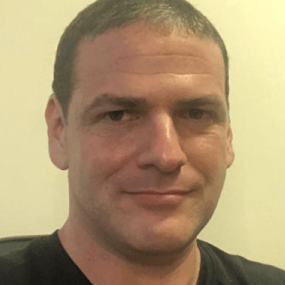
Asaf (Klaf) Weisman is a physiotherapist with two decades of clinical experience in orthopedic/musculoskeletal rehabilitation. He is a Ph.D. student and the lab manager of the Spinal Research Laboratory at Tel-Aviv University’s “Sackler School of Medicine” in Israel, where his studies revolve around pain, chronic pain, and spinal health. In the last eight years, he has been an active researcher, contributing to peer-reviewed scientific journals with his research findings. Asaf’s enduring fascination with pain, sparked by his skateboarding hobby, has prompted him to spend 20 years engrossed in the professional literature on the subject. His former career as a magician also grants him unique perspectives into clinical research and an understanding of psychological biases inherent in clinical practice. Asaf’s research interests include pain, chronic pain, spinal biomechanics and morphometry, and philosophy of science.