


Nociception vs Pain: Why Semantics Matter in Chronic Pain (Part 1)
Chronic pain care is stuck—and definitions may be the reason. In Part 1 of this two-part series, we reset how clinicians talk about nociception and pain. This episode is a recording of a live interview with pain researcher and clinician Asaf Weissman, whose work explores the relationship between nociception and pain—and why confusion in the field creates real-world harm for patients. In this episode, you’ll learn: Why “just semantics” becomes a patient trust problemHow mixed messages (“all in...


Chronic pain care is stuck—and definitions may be the reason.
In Part 1 of this two-part series, we reset how clinicians talk about nociception and pain.
This episode is a recording of a live interview with pain researcher and clinician Asaf Weissman, whose work explores the relationship between nociception and pain—and why confusion in the field creates real-world harm for patients.
In this episode, you’ll learn:
- Why “just semantics” becomes a patient trust problem
- How mixed messages (“all in your head” vs “tissue damage”) derail care
- Why “nothing is wrong with your body” is an overreach
- Where neuroimmune processes may fit in chronic pain biology
- Why psychological interventions tend to show only modest effects on pain intensity
- How clearer definitions could move research and practice forward
This is Part 1 of a two-part conversation. Here, we focus on the foundations—definitions, clinical frustration, and the biological plausibility behind what patients feel. Part 2 will go deeper into implications for treatment and the direction pain care needs next.
Subscribe for Part 2.
Join the Modern Pain Pro community.
*********************************************************************
📸 - Follow us on Instagram - https://www.instagram.com/modernpaincare/
🐦 - Follow us on Twitter - https://www.twitter.com/modernpaincare/
🎙️ - Listen to our Podcast - https://www.modernpaincare.com
____________________________________
Modern Pain Care is a company dedicated to spreading evidence-based and person-centered information about pain, prevention, and overall fitness and wellness
Nociception and Pain Part 1
[00:00:00]
Mark Kargela: I'm wondering, when you think about pain, do you primarily think of this as a scientific problem, a clinical problem, or a human problem or some kind of blend of the three?
Like how do you view pain yourself?
Asaf Weisman: It's a scientific, medical problem for sure because
Mark Kargela: If you work with chronic pain, you've probably heard patients say, they told me it's all in my head, and maybe if we're being honest, you felt uneasy about how pain gets explained in our field. Today is part one of a two part conversation that goes straight into that discomfort. This comes from a live interview I did with Asaf Weisman clinician, pain researcher and someone who spent over two decades treating some of the most complex chronic pain cases in public healthcare. Asaf also has lived with chronic pain himself, which deeply informs how he sees the problem. In this episodes, we're not talking about treatment techniques yet.
We're talking about foundations. What do we actually mean by nociception, by pain, and why do these definitions matter so much for real people sitting in front of us. We'll unpack why dismissing these debates as just semantics has led patients to feeling blamed, dismissed, or confused.
We'll explore emerging neuro immune evidence that [00:01:00] challenges simplistic narratives. We'll start building the case for why chronic pain may not be the brain problem it's sometimes framed as. This is part one, it sets the stage. Part two will push into where this leaves us as clinicians and where pain care needs to go next.
Onto the episode.
Announcer: This is the Modern Pain Podcast with Mark.
Mark Kargela: I'd love if you could kind of lay out a little bit where you're at, what, where you're, what you're up to, kind your positions and roles as far as in, in physiotherapy.
Asaf Weisman: I work part-time as a clinician still in in Clalit Health Services.
I don't know if people know, but it's the second largest health organization in the world. The first one is Kaiser Permanente. So, Clalit is like, the, is also, it's a pretty big health organization covers like four and a half million people. And it's a very challenging practice.
It's it's public healthcare. So I get to see really the, like, I, I think we tend to see in our practice the most difficult cases because. Like, it's the people [00:02:00] who don't have money to afford themselves private care, or it's the people who went to private care and it failed. So we treat these people on daily basis.
It's a very challenging practice. And I'm also a part-time researcher. I just submitted my my PhD. It's supposed to like, it's still pending. It's in review. I'm waiting for for the results of that. So yeah, I've got two hats. But but what's important to emphasize is that the latest, like with the paper, which we're going to tell the recent two papers that we're gonna talk about today, there are with the clinician hat on.
And it's been a highly collaborative effort with my Aussie mates. The doctors, Milton Cohen and John Quinner. It's an ongoing journey that we, we have commenced a few years ago due to our frustration from what we see is being taught out there and the discourse around pain. So, [00:03:00] yeah we engaged in writing several papers that were aimed to.
We were aimed to try to help clinician navigate the, what we see as a kind of a conundrum of definitions and and some people say it's around semantics, but then again, the whole pain field is built on semantics. If we don't have a really basic understanding of what we're talking about with each other, then we might as well not talk about it at all.
So the pain field or the pain science and practice of pain medicine is pretty much built on semantics and definitions. And if we don't have that, then we might as well call it pain religion, because then you can just decide what you believe pain is and you can start talking about it. So we were yeah, we, the first important paper I think we we published was pain is not a thing where we dealt with all the conflation [00:04:00] and the ramification of pain.
And that led us to the other project of about neuroplastic pain. Then the latest paper at u to an Aphorism is really like, it's been bothering me for years, and I brought it to my mates and we together we realized, yeah, we, I, we think we can crack it. We think we can we can pin the problem and solve another important issue.
And yeah we're very great grateful that it was published in Brain, a very one of the oldest running medical journals in history. In history. I think it's like, the LAD is the, probably the oldest one and Brain is one of the top 10 oldest running journals. So it was a very I think we can be proud that we got to publish it there.
It's a very important journal for neuroscience and then again. People have to remember that all our papers, all our recent papers are with a clinician hat on it. We're trying to resolve clinical problems.
Mark Kargela: No and that's one of the things I highly respect about [00:05:00] of clinicians like yourself who are doing research and seeing patients too.
I think sometimes we get in these academic debates and papers and philosophical discussions that I just scratch my head. I'm like, how does this help me work with somebody who's standing in front of me suffering with some pain at the moment. I'm wondering if you can dive a little bit deeper into the frustrations you were dealing with that prompted the paper, maybe tying 'em into some of the clinical observations you were seeing with some of those difficult patients you were seeing.
Like what were you, what were the frustrations specifically, if you don't mind of that prompted a lot of the groundwork in these papers that have really helped us clarify some of these thinking around nociception.
Asaf Weisman: On social media, like a lot of people always, as I said, like they, they tend to dismiss this as semantic the semantic discussion and it's important that I mentioned the place I work.
Okay. I work, I will mention it again, I work in public healthcare, so we, and so we treat people from all all the spectrum of, of social of social aspects and social social backgrounds and stuff like [00:06:00] that. So, what I and I've been doing it for like 22 years now, and in the current place I work since, like in Kal services.
I've been working since 2007, and. We see a lot of chronic pain patients. Like really I think this is like the, like I would place it at around 80% of the bulk of the patients we see are chronic pain patients, people who keep coming back for, with the same problem over and over again. And what's interesting is that we get to see a lot of people who went also to private practice and tried to resolve their problems there and people who have been to my colleagues, which whom I work with.
And so I get to see so I get to see a lot of patients who jump from therapist to therapist and I get to hear what other therapists told them, so, and. I, and in the last decade, I started seeing like a lot of patients coming to me, telling me, like, he said, it was all in my head, he said like, like pain was because because I was [00:07:00] stressed and it's a brain problem, and I kept hearing all this stuff.
Okay? And so it's a real problem, like it's a real world problem. PE people are being told certain things and then they have to deal with them. So it's not really a semantic problem. It's a real world problem. People are being told X or Y or z. Then this X and Y, Z or they either they stick or either they, you know, like they resent like the people, like the patients, they develop resentment towards it.
And I see it a lot. Like he told, like, I went to your colleague and he told me this and that. And yeah, like the private practice guy, he told me this and that, the doctor told me this and that. So PE people keep hearing a lot of different opinions about what pain is or what might cause their pain.
And they're being told all these different views and the patients, they have to navigate this those truth, those truths, they have to navigate them and they have to pick their [00:08:00] truth out there. And that's a problem if the field doesn't have, an agreed truth. And I think there is no agreed truth currently in pain medicine.
And that's a big problem. And so people dismiss it as a semantic problem. But I say, no, it's a practical problem. If we don't have, a fixed idea of what we are talking about, then obviously this will impact our practice and we'll have real world consequences on our practice. And it really frustrates me because if someone comes to me and he has a fixed idea about about, I don't know, let's say let's take posture for example, the, like, the orthopedic surgeon told me my back hurts because of a bad posture. If this, let's call it an X idea that got fixed in someone's mind, now it's going to be very difficult for me to work with that or to change that or to undermine that.
And we know that posture, for example, posture is not really, it's not really that, that big of a deal. You [00:09:00] know, it's all, it's highly overestimated and it's gotten, it's not got, it doesn't have a lot to do with chronic pain or whatever. So, the same goes for the same goes the other way around, like telling people, oh, there is nothing there's no damage in, there's no tissue damage in your body.
And that also bothered me, for example. And because. The beautiful thing about science is that it co it constantly evolves. And the last two decades have been pretty pivotal in, in our understanding of of neurosciences and especially nociception. And we discovered that, immune processes or neuro immune interactions can, can initiate nociceptor activation without any tissue damage.
So, so that, that is a contradiction between what people are being told. Like, like, okay, so it is not tissue damage, but it's actually [00:10:00] it's physiological conditions that mimic actual tissue damage without the tissue damage. So that is actually. Altered physiology or pathophysiology. So there is something wrong over there.
And I don't think we have, like, I think it's medical hubris to assume that we already know everything to tell a patient there is nothing wrong with your body. Okay. It's a form of hubris to just say that to, to completely like, it's a very deterministic way to think about it.
Like if you tell the patient there is nothing wrong with your body, okay, there is no tissue damage. Okay. I agree. Yeah. The stuff that I just mentioned comes without tissue damage, but it comes with actual altered physiology, which by the way, we now can measure it with certain kinds of technologies that are already exist.
And we are, and some of these technologies have als have already replicated findings of these pathophysiological conditions. [00:11:00] So we are already being faced with a contradictory situation to where people are being told they have nothing wrong with their bodies. Okay. Yeah. Like, science already proves us wrong and we should be humbled by that.
Okay. I don't know. I will mention like, an interesting finding is with pet positron emission tomography where they took people with chronic low back pain and what they discovered is that they have some sort of abnormal activation of their glial cells in the brain. Okay. And it's been replicated twice now by the same group.
They found it like they, they did their own, they replicated their own study and I think it was by Marco Logia, I think Marco Logia or or Vital Nedo. Okay. They were able twice to show the same findings in people with chronic low back pain. So that should humble us, okay?
Because people were told there is nothing that we can see in their, in your body. And now all of a sudden we [00:12:00]have this new technology that where we are able to see some actual changes that are in, in a large correlation with the clinical complaint. Okay? So that frustrated me and it seemed not me, also my Australian colleagues people should probably be aware that John and Milton, I think they have over.
Over 80 years of pain medicine together, pain medicine experience. They are trained pain medicine physicians. They're both rheumatologists, but their subspecialty is pain medicine and their conjoined experience is is more than I think it's more than a lot of people out there who are currently researching this stuff.
So, this stuff kept frustrating us. Like people are being told there's nothing wrong with them and are being implied or sometimes explicitly told that their problem is is a psychological problem, is maintained by psychology and stuff like that. And we [00:13:00] find it we find it disturbing that we tried.
We try we really try to we put a lot of effort into those papers, into our recent papers. There was, it's like, it's an ongoing work for six, six years of ongoing work and one thing leads to another. And, we're trying to make it logically coherent and everything being built on a very on a very robust foundation.
So I hope people will realize that. Okay.
Mark Kargela: Yeah, no, I've greatly appreciate, I know the work that goes into, you know, formulating these type of, you know, papers and things. So, you know, massive kudos to you all for putting that out there. Completely agree with you on the pain in his brain or pain in the brain.
Thing that, you know, pain, neuroscience education really was like trumpeting that for quite a while. Pain is in the person and in their world and in their physiology. Right? Like it's not some sort of thought up, you know, thing that your brain can think you into pain and think you out of pain type things.
But your thoughts obviously have biological correlates. Now. We don't need to get into [00:14:00] like, you know, consciousness and all those things 'cause those are difficult problems that are maybe for another podcast. I'd love to hear from like, your own experience with pain. I'm wondering how that may have shaped your frustrations or your thoughts and your approach to that.
Or maybe also your experience and what you've seen with people. You've already kind of spoke to the fact that, and I maybe haven't seen it as frequently as you, but I definitely have had people who've come to me saying. I've been made to think this is all in my head. Right. But you nicely, especially we know lifestyle medicine and all these different things where we know neuro immune neuroendocrine factors get massively dysregulated in the presence of some of these chronic pain situations where that can be a problem.
But I'm wondering if you can kind of discuss how your own experience with pain and what you were seeing has kind of really shaped it. You've spoken to this a bit, but I'm wondering if you can kind of, dive into like your own experience and how that may kind of shape, you know, 'cause you obviously know pain and you're the expertise in your own pain more than any human out there, of course.
But I'm wondering if you can kind of kind speak to that.
Asaf Weisman: Well, I just started talking about it publicly. My family underst knows this, [00:15:00] but since I, I'm not, I'm 47 now, almost 47. And since age 13 or 14 I've been having like, really chronic headaches and bad bad stomach issues. And that I'm talking about like early nineties where my parents took me to the doctor and fibromyalgia was still not a label back then.
And like I, it, it was. It was labeled in 1990, but people here in Israel, like I'm talking about early 1990s, there was still no aware awareness for this diagnosis. And I've been having like, really chronic fatigue and since I, I've been 13, I, like, I, I have this really, like, I find this fat fatigue all the time and really widespread pain in my legs.
If I go to the gym now and I do leg leg exercises or lower body workout, if I can easily overdo it and then I can have domes for a month, for one month, okay. Usually domes, they should last like about three to four days, but my domes would last for a month and that will completely [00:16:00] incapacitate me.
And I've been relapsing and remitting and so. I've been relapsing and remitting my whole life. I've, I had a really bad relapse right now. I'm still in a relapse. So that kind of shapes my understanding, my own personal understanding with that. And that gave me a perspective. Like for example, I keep saying like, if me, like one of the most educated people out there about pain in the world is not able to read himself, from his fibromyalgia, then I don't think that anyone can.
Okay. And trust me, I, I did yoga. I do meditation, I do all this stuff. It helps a bit for me. Mm-hmm. But I don't expect it to read it. I don't expect. Sorry, I don't expect me to get to heal from fibromyalgia. It's a reality which I live with, and I accept it. And as I said, I had a really bad relapse right now.
And really I don't see any any apparent reasons why my relapse should happen right now, but okay, [00:17:00] that doesn't matter. And then I started working with people suffering pain and and I saw that like, really it's my honest my honest observation of my own practice, like really when I finished physio school, I was really like, I was really believing that I will be able to influence people and their trajectories.
And as I said, I work in public healthcare and I see the, I tend, I see all those cases that are really like persistent, difficult to treat, and I saw that I'm unable to affect their trajectory or anything by mobilizations, manual therapy, whatever. I'm just unable to have a large impact and I keep seeing it after 22 years, I just am.
Okay. So that's my honest observation. Some of it, yeah, of course some of it is accompanied with a lot of frustration about it, but that is just the clinical reality. Okay.
Mark Kargela: Yeah, we got people thanking you for. For sharing your personal journey. 'cause again, I think that's been a, [00:18:00] an interesting thing we've seen with a lot of people who've been really diving into pain out of, you know, trying to better understand it.
And like you said, you probably studied it as meant much as any person out there and still we have really no solution or, you know, thing that's really making a massive impact on you, on it. So thank you for sharing that. I'm wondering, when you think about pain, do you primarily think of this as a scientific problem, a clinical problem, or a human problem or some kind of blend of the three?
Like how do you view pain yourself?
Asaf Weisman: It's a scientific, medical problem for sure because they come to us, they come to the doctor now. Why? Like, this is really like, this is really like in front of our eyes. And we cannot ignore it because they come to the doctor. Why do they come to the doctor? You have to ask yourself, why do people who experience pain come to the doctor?
Because what we claim in our work, in our recent work is because they become consciously aware of this inherently [00:19:00] unpleasant, primordial somatic sensation, and they come to the doctor because they, this sensation is associated with tissue damage. Okay? So there are not wrong to assume that there is something going on in their body, and that is why they come to the doctor.
They don't go to the psychologist for that. They come to the doctor. That is why it's a medical problem. It's a scientific medical problem. And if it's a scientific medical problem, we need to solve it on a scientific medical level. Okay. And what we observed, my colleagues and I, we observed is that like there is a certain kind of steering towards that psychological, and we say this is completely misguided and wrong.
They come to the doctor people when they have bereavement, like when they're in bereavement or you know, in Berea or psychological agony, they know they don't have to go to the doctor. They know it. [00:20:00] Okay? They know they should seek a psychologist. But when you get like, a burning sensation in your shoulder.
A real burning sensation in your shoulder and where you touch the area and it's sensitive to the touch they know to go to the doctor. People are, we have this we are inherently intelligent for what happens within our soma. And so we, that is why we we stand our grounds that pain is a word we use when we become aware of activation of an apparatus which is capable, which is not only capable it's job is to to encode primordial unpleasant sensations.
We, and it's very important. They are inherently primor. They're inherently unpleasant. Okay? And people go to the doctor because they become aware of this activation of the [00:21:00] apparatus. They don't go because, because they think they, they're because they're making, their brain is making it up. Okay? And again, we have this substrate.
Not only that, we have this substrate. This substrate is actually the first evolutionary conserved trait. Okay? Our nociceptive apparatus is the oldest evolutionary conserved trait. A lot of everything that came afterward was superimposed on this apparatus.
And we. This apparatus is hardwired. And our e evolution has made us in a way to, that we need to be in tuned to any activation of this apparatus. Okay? So that, that why, that is why we say pain. It's fundamentally wrong to associate the word pain to perceptions. People use the word when they become aware of actual substrates, of unpleasant sensations being activated.
That is a [00:22:00] very important aspect of our work that we stand our ground and we insist on that.
Mark Kargela: Yeah. And I like where you're coming with it. I'm wondering, 'cause the the nociceptive apparatus, it sits in a context, right? It's not like the brain in the VAT thought where it's just sitting. Devoid of any input.
Right. And some of that input is contextual, right? It's social, it's environmental, it's maybe that person's, you know, I don't wanna say perception, but, you know, making sense of what that, that sensation is. Right. And wouldn't you agree though, that psych psychology, like if you think of polsky and stress research and stress biology, like those are, he would argue that those are biological substrates in and above themselves.
Right? You know, we know HPA access disruption and dysregulation and things that wouldn't those have some sort of, at least modulating component to the activity of the AEs? Yeah. We, and again, not to say that people are thinking up their pain. 'cause obviously there's, but can those things, you know, have acknowledge a large effect?
We acknow
Asaf Weisman: that. We acknowledge that in our paper. We acknowledge that. [00:23:00] That psychological issues or psychosocial stress and stuff like that, they can, it can modulate, the experience once it's been settled, it can modulate it. And the way I think people tend to think, okay, it is true that we observe that psychosocial stress can predict the occurrence of chronic pain and quite quite reliably.
And then people say, okay, if it, if we're able to predict with psychosocial stress the emergence of chronic pain, then we should the reasoning is we should be able to treat it psychologically. But I say, please go and make an honest assessment of the meta-analysis of all the, all those interventions for psychological, all the, all those psychological interventions for chronic pain. And you will see they have a trivial marginal effect, which is in the modulatory realm. And what we see is that chronic pain, re I argue chronic pain resembles a lot of chronic pain [00:24:00] states, they resemble autoimmune autoinflammatory conditions where once the condition sets it it cannot be reversed anymore.
Okay? And this is, and also if you look at the meta-analysis of of all those psychological interventions and you see the marginal effect, then you say, okay, it cannot reverse the situation. And this in biology it's called a threshold. Like we, there are threshold models in biology where the system.
Passes a certain point where, yeah, psychosocial stress may activate the apparatus, but it's not a first of all, the apparatus sits as a buffer between, the chronic pain and the psychosocial stress. So, it's not like immediate activation. It's like, Okay. So psychosocial stress it sets all those biological cascades like, it, it sensitizes the immune system and the HPA access.
And it leads to a constant arousal of the [00:25:00] apparatus up to a point where it crosses a certain threshold. And then once this threshold is being reached, you're, you cannot expect to reverse it anymore. Exactly. Like autoimmune and autoinflammatory. Diseases and what the research from the last 20 years shows us is that a lot of chronic pain states, they have neuro immune processes underlying them.
So why do we expect why do some therapists expect to be able to reverse chronic pain states with psychological, treatments, but they don't expect to reverse autoimmune diseases with psychological treatments? But I argue it's exactly the same. The biology points us that they're very similar in their development and their trajectories.
Mark Kargela: You, you make good points on the trivial effects of, you know, but wouldn't you agree though that there's not really been massive effects from any like, single mode way of looking at pain where it [00:26:00] might require a more multimodal approach where to think you're gonna just psychologically get somebody outta pain.
But maybe in this, in a situation where somebody's in a massively distressing situation their financial wellbeing's being threatened, their identity as what they define themselves as a person's being threatened, and yet we still can do biologics with that. I think sometimes we look at this like single island things and of course if we look at it from, and I think that's the difficulties of research could, to have all those factors and to determine the, you know, con contributions of things.
But would, do you think that might play into why, you know, psychological things on their own haven't really made a significant impact?
Asaf Weisman: Again, I, as you said, we, if we look at all, any type of intervention for all those chronic pain states, they all have the same marginal effect. And when you compare the one against the other, usually, like, you'll get the same effect.
And that is why I say it's similar to the trajectory of autoimmune diseases where you can have some effects, some small effects, but you can't really reverse it. And [00:27:00] and again, we have to accept this reality. And I tend to think that what we're currently missing are biological treatments for those for those conditions.
The problem with, and again, this comes back to the reason of our conversation now, the problem with chronic pain states is that we don't have an anchor currently. We don't have an anchor. Where in autoimmune diseases, we do have an anchor, or in cancer research, we have an anchor. We have the tumor where we can we can follow the progression of the tumor and see if our treatments affected.
And also in autoimmune diseases, we can see the lab tests the results they change and stuff like that. But in chronic pain, because we don't have an anchor, because of our bad semantics and our bad definitions, we don't know where to look for and how to look for that. And so we are lagging behind with good biologics because of all the semantic and definitional problems in the field where we're, [00:28:00] well, where everyone is looking at a different thing.
Okay. So that is why our work. And that is why we believe our work is, we hope it will lead to a better, discourse in the field where we are able to discuss the same thing whenever we talk about things. Okay? Yeah. So I, I believe that once we solve the semantic problem, to a degree the problem with pain is that we can only make it we will, we have to be realistic.
And as John and Milton called Pain, pain, the experience is an emporia. So we are only, it's a mystery. We are only going to be able to resolve it to a certain extent. Okay? The definitional problem. But for example, in our recent paper, which is companion paper to a, due to an aphorism. We actually discussed how the IASP messed up the previous definition with the new definition of pain where they inserted well it was, they [00:29:00] didn't intend to, but they somehow inserted several paradoxes by introducing one word into the definition resembling tissue damage.
Okay. So, we really believe that the field first has to, it has to solve the semantic, definitional issues first, and then the field will be able to progress to better outcomes in treatments.
Mark Kargela: Yeah, no, that makes total sense. What do you make of the research around like social factors, psychosocial factors, and there.
Impacts on like neuro immune processes. Right? Where like does that to you validate that they may have a place in, in, in addressing as part of this aporia that could be part of this thing. Because yes, they have a place we see cytokine studies and biomarker studies that show that these factors seem to, you know, significantly associate with dysregulation in these neuro immune neuroendocrine processes.
I'm wondering how you see that all fitting into the big picture.
Asaf Weisman: [00:30:00] Yes, they have a place, but what I'm afraid of is that pe like a lot of therapists don't have an honest and realistic, view about them. Like really people like expect to resolve or to, you know, to completely alleviate chronic pain.
We with those approaches. And I think it's a, it's an, it's not an honest view. Okay. That's why I say go and look at the meta-analysis of these studies, of these of the research around psychological interventions. And please just make a real honest assessment. And you will see that the effect sizes are trivial.
They're not different from acupuncture, dry needling, electrotherapy, exercise therapy. They're not different from anything. When you look at the, when you look at them separately and even like separately and also conjoined as, or adjunctive, they don't have, they, they don't have such a large effect. And I wish people had more honesty about that.
Okay. And so they [00:31:00] have a place. Yeah. Like, okay. I, when I look at the literature, I can see Yeah, they. They can give people better grasp of their problem. They, it can resolve a bit of, disability around that. It can improve people's efficacy, self-efficacy, yes. But if you're honest about it and you look at the trajectory of the pain state and the pain intensity, it has no effect on that.
Okay.
Mark Kargela: Yeah. I'm wondering, like, would you, would it be biologically plausible? I agree. Like I, I think on its own, you're not gonna get somebody, if you get somebody who's dealing with massively stressful context and, you know, some of the psychological literature shows some decreased, you know, signaling and biomarkers with some treatments, nothing earth shattering that's making.
I agree with you on that, but I just seems like it still could be a worthwhile part of the puzzle. To me, it makes biological plausibility that if you can get less stress system activity based on somebody maybe able to manage and cope with, and. Maybe respond differently to what's going on in their [00:32:00] nociceptive apparatus, that could have a top-down kind of ability to positively impact a pain experience.
Totally agree with you that it's probably not gonna be like you're, you know, you'll, I mean, you'll hear anecdotes and all that stuff.
Asaf Weisman: It might help and lead to a remission. If it's a very good, like on a, if all the stars are aligning, then it might lead to a remission in the, in, in a state, in, in fibromyalgia, for example.
But then again, you have to be realistic and remember that it is a relapse because fibromyalgia the way it behaves is relapse remitting and most chronic pain states, they behave like that. Like it's very rare to see someone, I think probably CRPS is a chronic pain state where people have constant debilitating pain all day, like 24 7.
Most other conditions, they're relapsing remitting. And and so you have to bear that in mind. Okay. So most people don't have 24 7 hour relentless chronic pain. It behaves yeah. It wax and wanes. [00:33:00] Okay. Yeah.
Mark Kargela: Yeah, that makes sense. I just wanna put, we have some questions coming in.
And Anna Maier had asked, I believe correct me if I'm wrong, that there is evidence in neuroscience studies that nociception nociceptive inputs may result in higher connectivity in areas of the brain linked to learning and to emotions, which may indicate top-down mechanisms for maintenance of that sensation.
I, I think too, like some of the work you know, with, I think it was a Hashmi study with increased connectivity and activity and emotional centers of the brain when things transition to chronic pain. I'm wondering if you can speak to that,
Asaf Weisman: which, where I'm trying to crack it. It's like, yeah. Which may indicate down mechanisms for mainten.
Mark Kargela: She's saying that there's evidence in neurosci, correct me if I'm wrong, but there's evidence in neuroscience studies that nociception nociceptive inputs may result in higher connectivity. So this nociceptive activity results in higher activity in areas of the brain linked to learning and to emotions, which may, in her does, she's wondering, does that indicate top-down maintenance of that sensation or that nociceptive apparatus [00:34:00] activity?
Asaf Weisman: Not really. Top down acts as a modulator. Okay. So, when you have good, healthy apparatus under strict homeostatic conditions, you also have very good top down modulation. Okay? Now, what happens is that what I think there's a bit of a conflation here. Okay? So when you get like, okay, I'm going, for example, I'm going.
Neuro immune activity in your second order neurons. Okay. You get also altered altered brain processing. And and then, part of that will be also some sort of changes in the top down modulation. So it's not like, it's not like a learning process where the brain keeps this sensation going by, by signaling to the second order neuron, keep on keep on this sensation going.
It's just some sort of some sort of game changes in the processing where there is no longer any modulation of that. Okay. So the sensation just keeps on going. [00:35:00] That's what we're claiming, like that the apparatus is constantly activated and it's a top down thing. It's not a bottom it's a bottom up thing, not a top down.
Okay. Apparatus activation is always bottom up, always. And chronic pain states, they have a bottom up activation, constant activation. It's got nothing to do with the with the ma. Maybe, theoretically speaking, you can have some sort of a chronic state if you get a brain injury exactly. In the modulation parts.
And then you will have like a lack of modulation due to a lesion in the brain. And then theoretically you can have such a state, but again, dictated from theory
Mark Kargela: That's it for part one. It sets the stage. Part two will push into where this leaves us as clinicians and where pain care needs to go next. To wrap up, part one, I wanna zoom out and make the bridge really clear in this episode is Asaf challenge. A lot of the causal language we've all heard and sometimes probably even used around pain.
Not as an academic debate, but because [00:36:00] the words we choose have consequences. Patients don't experience semantics. They experience confusion, dismissal, and mixed messages that can stick for years. So here's where we're going next. In part two, we get more specific and more practical. We unpack what Asaf means when he says pain is always bottom up and why that does not mean it's always coming from the tissues, or that imaging has to show damage.
We dig into the idea of altered physiology as a legitimate target and why chronic pain may sit closer to neuro immune and autoinflammatory mechanisms than most of our current narratives allow. We also get into the hard tension clinicians live in every day. Yes, stress, fear, and context matter, but are they drivers, maintainers, or modulators?
And what do you do when the effect sizes of unimodal interventions are modest, but the person in front of you still needs a path forward? And we close with where this might all be headed, better diagnostics, better pipelines, and potentially more targeted biologic treatments. Plus what role clinicians like physios may play as guides and case managers as the landscape changes.
So if part one helped you, question the foundation, part two is where [00:37:00] we build the clinical implications. Make sure you tune into that when we release it. And as you do, drop a comment with the question you want answered most.
Where do you feel the most uncertainty in chronic pain care right now? We'll see you next episode.
Mr.
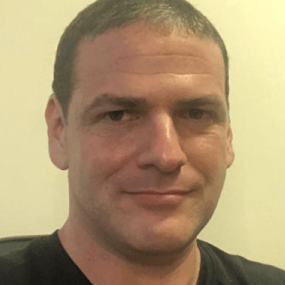
Asaf (Klaf) Weisman is a physiotherapist with two decades of clinical experience in orthopedic/musculoskeletal rehabilitation. He is a Ph.D. student and the lab manager of the Spinal Research Laboratory at Tel-Aviv University’s “Sackler School of Medicine” in Israel, where his studies revolve around pain, chronic pain, and spinal health. In the last eight years, he has been an active researcher, contributing to peer-reviewed scientific journals with his research findings. Asaf’s enduring fascination with pain, sparked by his skateboarding hobby, has prompted him to spend 20 years engrossed in the professional literature on the subject. His former career as a magician also grants him unique perspectives into clinical research and an understanding of psychological biases inherent in clinical practice. Asaf’s research interests include pain, chronic pain, spinal biomechanics and morphometry, and philosophy of science.