


Chronic Back Pain? What ACTUALLY Helps Long-Term Recovery
Enrolling our next cohort of Pain Practice OS soon - JOIN US! Most back pain improves – but how we guide recovery makes all the difference. In this part 2 conversation with Dr. Jim Eubanks, we dig into: First-line care for acute low back painWhy rest is often the worst adviceThe role (and limits) of hands-on careWhen and how pain procedures fit into a planClear guidance on when to refer to a physiatristNavigating complex cases that stall in recoveryFuture potential (and current pitfalls) of r...


Enrolling our next cohort of Pain Practice OS soon - JOIN US!
Most back pain improves – but how we guide recovery makes all the difference.
In this part 2 conversation with Dr. Jim Eubanks, we dig into:
- First-line care for acute low back pain
- Why rest is often the worst advice
- The role (and limits) of hands-on care
- When and how pain procedures fit into a plan
- Clear guidance on when to refer to a physiatrist
- Navigating complex cases that stall in recovery
- Future potential (and current pitfalls) of regenerative medicine
This episode brings clarity and clinical confidence to some of the most debated decisions in spine care.
Subscribe for more evidence-aware guidance, and check the links below for show notes, resources, and clinician tools.
*********************************************************************
📸 - Follow us on Instagram - https://www.instagram.com/modernpaincare/
🐦 - Follow us on Twitter - https://www.twitter.com/modernpaincare/
🎙️ - Listen to our Podcast - https://www.modernpaincare.com
____________________________________
Modern Pain Care is a company dedicated to spreading evidence-based and person-centered information about pain, prevention, and overall fitness and wellness
Eubanks Episode 2
[00:00:00] Hey everybody. Before we get into this week's episode, I just wanna let you know that we are about to enroll our next cohort of pain practice os. This is a course that's built on the fact that we see a massive issue where people talk about psychologically informed care. We talk about the bio-psychosocial approach.
Yet our treatments tend to stay very biologically oriented with little tidbits of psychologically informed care, we want you to be able to do what you do well with biologically informed treatments, but also learn how to incorporate psychologically informed care such as what you see in cognitive functional therapy where we help people make sense of their pain.
We help people understand some of the fear and things driving their pain. We give them tools in the form of mindfulness and other psychologically informed approaches. So you can treat from all aspects of somebody's pain experience and have the best chance of helping them. So if that sounds like something you'd be interested in, don't hesitate to jump on our waiting list.
Again, we're gonna enroll soon. You can get on the waiting list at https://modernpaincare.com/painprogram If you have any questions, don't hesitate. Reach out to us on social media. We'd love to answer them. Our goal is to train clinicians who can get [00:01:00] into communities and help the people in your communities who are struggling with persistent pain.
We want you to become one of those clinicians. Hope to see you in our next cohort.
Jim Eubanks: we have surgery that can change structure by removing structure or by adding things. There are limitations within that, and it's important for patients to know how an improperly applied procedure can make them worse,
hey everyone. Welcome back to the Modern Pain Podcast. Today's part two of my conversation with Dr. Jim Eubanks, a physiatrist who brings an evidence-informed, patient-centered lens to spine care.
If you missed part one, make sure you check that episode out for the foundation of this discussion.
In this episode, we dig into what really helps people recover from low back pain. You'll hear why just rest is often the wrong advice. How to think about hands-on treatment, when to consider pain procedures, and when a referral to a physiatrist is the right move.
Jim also shares his concerns about overused interventions, gaps in recovery plans, and the need for truly interdisciplinary care. It's a grounded, practical conversation with insights you can apply right away in the clinic. Let's get into the episode.
Mark Kargela: This is the [00:02:00] Modern Pain Podcast with Mark.
I'm wondering if you could speak to. Somebody who's like first line of approaches for low back pain. Like if somebody's in an acute situation with low back pain, what would you say are kind of the ideal first line care for somebody with back pain? Who's trying to decide which way am I gonna go?
What's my best path can be to make this situation hopefully resolve in the best way possible?
Jim Eubanks: Yes, important. So once we've sort of, ruled all out the red flags and we can say that you know, this is a very common, typical experience of back pain that you're having at the moment. Continuing to stay engaged with life and active as tolerable is necessary. So avoiding rest, right there, there still persist this idea. And I think it is pretty intuitive for most people that they should stop doing things. They should withdraw, they should rest more, right? Like, and the reality is that rest in and of itself doesn't really resolve [00:03:00] the pain. Activity has other health promoting properties to it. The big one probably is preventing deconditioning from the experience of back pain.
Right? And so, another mentor of mine, Jim Rainville, he used to say, you know, you can have back pain and you can continue working and make some money, or you can have back pain and stop working and not make money, right? So the reality is that the activity part is truly essential. Not that it will resolve the pain or problem in and of itself, but that it has other health preserving properties to it. And we know that rest doesn't do us well. It's important to. Understand if there are some of those affective considerations. Anxiety, depression if there is poor sleep, if there are other health states that are problematic [00:04:00] and might delay recovery that otherwise would be expected, that we have an understanding.
Those things need to be addressed at the same time. It's a nice opening for people that come in to see me, to address those things. Another big one is tobacco smoking dependence. I address that every time I see a patient who is actively smoking it has treatment blocking effects for anything else we might do as well.
And so I talk to them about that. I think understanding the. Multi or interdisciplinarity of recovery is really essential for people to understand and that there is not going to be, in many cases, a single person or professional who, again, has secret knowledge or more to provide than the rest of us. And so [00:05:00] seeking out good principles is the most important consideration. Sometimes medications can be used to help control pain, anti-inflammatories, non-steroidal anti-inflammatories. Among those who can take them, there are certain populations that cannot take them. Unfortunately, we're in a place right now still in medicine where we do not have great medication options. For back pain. We have a few that have very modest effects and have to be considered for the right patient in terms of their tolerability of those. But there is the potential for us to introduce higher risk for patients by giving the wrong kinds of medications or medications that are not recommended for that population. And we have to be understanding of the limitations that we currently have. Now, sometimes there might be a very specific [00:06:00] structural issue going on that is amenable to something like a targeted injection. So in a patient that has a massive disc herniation that is new, they have single leg pain, the pain is severe, it is very inflammatory. They have a radiculitis, for example. There might be very appropriate things that we can discuss along the way, but even in that population, we want to encourage them to stay active, to participate in their care, and to know that the majority of back pain gets better or improves over its worst sta you know, moment, regardless of what we do. Sometimes we can try to condense the pain intensity timeline for them, in many cases, the natural history of doing something or not doing something for [00:07:00] those patients is similar. And so I try to bring that up too because there are some people who. Say, you know, I'm still working, I'm still able to bike, I'm still able to do these things, and all they really need to know is that it's safe to continue. Some people need more structured guidance, and that's where I think physical therapy especially has a huge role. When we tell someone to stay active, but they were not previously active, that's a problem, right? So we know that the best thing is for them to stay active, but if they don't have that disposition or that background or that set of skills, yet, that's a patient that I have a specific kind of conversation with, and I say, this is something that we can work on right now to set you up for success, not just during this particular moment of back pain, but in the future when [00:08:00] other things happen. We, we can give you new skills and teach you how to perform home exercise or to modify your normal daily routine. And it's an opportunity to help them better control future episodes, which for most people who live long lives now will experience from time to time. And and so that's the nature of it, right, is we want to encourage them to stay active and engaged to really try to focus on function judiciously use what pain management and modifying options we have, which often does require clinician input and some oversight for that part. And we also want to help them understand the general principles of health promotion. So that they can optimize their current experience, but also the future ones.
Mark Kargela: I'm wondering if you can speak to a little bit of hands-on care. 'cause there's a lot of folks providing manipulative care, manual therapy [00:09:00] care, hands-on treatments, and you kinda alluded to it a bit with, some of these judicious use of pain modifying procedures.
It's just something I see in practice personally 'cause some patients. Really feel like they need that and sometimes maybe need it to a detriment of getting off the table and I don't have any objections to applying it in maybe a short term basis to help maybe give them an opportunity to move a little bit more freely and comfortably, but ideally not something that we are hanging our hat on long term as the only solution to getting somebody back in life.
I'm wondering where your thoughts are on that.
Jim Eubanks: Yeah, I agree with you. I think that, you know, someone is very painful and it is a way to. Help them feel like something is being done so that we can activate them more. That's probably the best use that I see. The therapist that I work with overwhelmingly and consistently focus on active care and the whole goal is to empower the patient. Right? I don't really mind or [00:10:00] care if there are other things along the way that help us achieve that. As long as it's safe and reasonable, it would be the focus on passive care as the cure, right? Standalone that I think is a bigger concern. We want to make sure that patients understand the difference between us doing something to them or for them. Them learning how to do things for themselves. Right? And so that's the difference. And so in that way it, it's a little bit like the patients who go to see certain pain doctors who give them injections every three months for years and don't ever really focus on the other lifestyle factors and health promotion and empowerment that are going to allow the patients to make progress with their condition and not feel stuck. It's the same kind of thing that can happen with passive care. And as long [00:11:00] as we really use it as one simple tool in the toolbox for a larger intended purpose, then I think that's fine. It's just that we don't want to be using the same tool. For patients all the time and as clinicians, regardless of what type of clinician or physician that we are, we have to understand enough about recovery and functional progress and improvement principles that we don't see ourselves as aligned with what we happen to do, but see it as tool than a toolbox that might be applied at different times to help the bigger goal of getting the patient better and more capable. And also thinking about the need to bring in others when our particular [00:12:00] set of tools is inadequate or not complete.
Mark Kargela: Good points. Let's bring it to pm and r, physical medicine and rehabilitation doctors. 'cause I think there's maybe a, in certain areas where maybe this isn't as big of a, or where even the availability right may not be there for some patients. But I'm wondering for folks that have that option to get engaged with a physical medicine and re rehab doctor a physiatrist.
I'm wondering if you could speak to when someone should see a physiatrist.
Jim Eubanks: Yes. That's great. So when I I did a fellowship in a comprehensive interdisciplinary spine clinic at the University of Pittsburgh called the program for spine health. And we sort of had three buckets of people, if you will, that experienced spine pain. You have a large group one, which is common types of back pain.
Where there are no red flags, no concerning issues that need to go see a surgeon. And those folks need to be quickly [00:13:00] engaged in physical therapy, activity based approaches heavily emphasizing self-efficacy and recovery and just optimizing basic health principles. Right? Then you do have the red flags that we talked about earlier, which is a very small subset of folks who probably need to see a surgeon quickly and perhaps urgently. And that's a small bucket, but an important one that, that everyone who deals in spine pain needs to know. And then there's this other bucket that I tend to see now and would see in the program for spine health, which is patients who maybe have a more complicated medical situation. Where they didn't respond the way that most would to guideline recommendations or first line types of care. They might have additional diagnostic workup that's necessary because there might be an underlying condition that has not been yet discovered an [00:14:00] unclear diagnosis. So I, my, my physical therapy network here, I will often receive messages from them and they'll say, you know, we thought this patient had x going on, but it doesn't seem to be that they're really not responding the way we anticipated.
I think we need to take another look. And so those patients come in and we figure out, we sort of start over if we need to, and then we might catch something, for example, that wasn't yet known about their condition. Mixed conditions. So people that do not just have one thing going on and need some additional medical management or guidance stalling in progress.
So if patients stall with otherwise expected recovery that's an important reason to sort of come see a rehabilitation physician. And those folks comprise a large percentage of my patients. Now once we have a diagnosis, they might [00:15:00] get back into therapy, but with different recommendations from both of us.
So I might say, okay, we know that they have this new autoimmune condition that was previously unknown, and so now why don't we change our strategies a little bit and don't focus so much on the leg pain per se, because it's not just that. Let's focus on some other aspects of their rehabilitation strategies. And so those are the ways that patients generally get into my clinic. I'd say one other is severe pain or high impact pain that is preventing them from moving forward with rehabilitation strategies. And those folks might have such a high level of pain interference that they can't tolerate the recommended or recommended rehab approaches. Or feel like they can safely do it. And so they may also simply need another round of conversations, [00:16:00] reassuring them that there isn't some other structural bad thing going on, or there isn't some other process going on that justifies the sort of concern that they shouldn't be doing it when in fact they can. So, so, you know, with adults often it's the case that you know, you need to hear the same kinds of things said over and over again on different time points. Learning theory and part of it involves that. So they may need to hear a physical therapist say one thing and then hear me say it, and then they're like, oh, okay.
I I can trust this now because I've heard multiple people say it.
Mark Kargela: It's such a benefit too with the. A kind of interdisciplinary approach you all take when you have people s you know, speaking the same language, really kind of unified in a voice that's in best interest of patients moving forward. And definitely I've leaned on my physician colleagues numerous times for that reassurance and that can be a powerful pain modulator when somebody can move with more confidence and less fear and less guarding and less [00:17:00] apprehension, which information can be very powerful for some people.
But I love how you think learning theory and those things that go behind that. I'm wondering if we could speak to the interventions. 'cause a lot of times, pain procedures get really sometimes looked at as the frontline. And of course you guys have a, a more of a nuanced rehabilitative process to really look at active approaches as frontline approaches.
And again, not to say interventional procedures don't have their place 'cause they do. I'm wondering if you could speak to where they fit in the management. 'cause I do have patients who immediately, that's where they want to go. They may have been engaged with a pain physician. And they feel like they, they need to go to this before they can engage.
I'm wondering where you see interventional procedures fit and maybe our evidence that we have to support them as approaches for spine pain.
Jim Eubanks: Yes. Very important. So with procedures, you know, far into the spectrum, we have surgery that can change structure by removing structure or by adding things. There [00:18:00] are limitations within that, and it's important for patients to know how an improperly applied procedure can make them worse, right? So people who do procedures, whether it is surgery stuff or injection stuff, want to have the best chance to help the person. And so I think making sure that indications are clear. And really adhered to in terms of appropriateness of considering those things is essential. And so, you know, there are folks who do different things within medicine that probably don't have very clear indications.
And so some patients might be getting epidural steroid injections for problems that we know epidural steroid injections don't help so well and maybe isn't the best thing for them. On the other side, you, you have folks [00:19:00] that I, you know, I hope I adhere to where we kind of have a sense of what epidural steroid injections can best help with. And when it's appropriate, we bring that conversation up and have that shared decision making. Sometimes patients might be appropriate, but they don't want injections, right? And so that's really important to know that the person who does something, again, doesn't identify themselves with that too strongly, but rather sees it as an option for the right people at the right time when it's appropriate, and when we can have a recovery plan in place beyond just that, that we might offer.
So epidural steroid injections are very well known, sort of common from an injection standpoint, applied to, in the epidural space, sort of a, nAR approach or what we call transforaminal, which is coming from the size or of right at the nerve root. [00:20:00] If you have a large disc that's hitting the left L four, you can see it on imaging.
It fits with the symptoms. That, that might be a potential target for a transforaminal approach where you're delivering steroid and often a small amount of anesthetic medication next to it for the purpose of pain control. Right? The body's immune system the macrophages will go in there and work on herniated discs over time and we see resolution and many folks, especially a bit, you know, younger cohorts over time as evidence of that. I see that frequently, and so I tell them about the body's regenerative potential in that way. That sometimes we might just need to try to buy them time to better tolerate what's going on until that happens. And so that's how I think through epidural steroid injections. For example, radio frequency ablation [00:21:00] is something where certain nerves in the body that do not control major muscles or skin sensation exists and might be amenable to ablation, which is processed where there's a heating up and denaturing of that nerve so that it stops functioning in the spine. This is most commonly known with the medial branches, which innervate the facet joints. Conveniently, there's no major loss of movement or sensation if those nerves are ablated. So the idea is that you stop the nerve that innervates the facet joint if you have facet mediated pain, which can be a common cause of axial pain due to spinal osteoarthritis in the facet joint or facet arthropathy, for example. And that could be a way of [00:22:00] helping to bring pain levels down in order to continue moving forward with functional progress. And so when I consider that, for example, I try to be as specific as I can be about which facet joint might be causing the issue for the patient. And then as soon as we do that, or as soon as we consider it in that population. I get them into aggressive rehabilitation. The whole idea is to take advantage of the better pain control so that they can get back onto the recovery trajectory that otherwise we want to see for them. So that's how I think about these sort of common things. There are other things that are a lot less common. PRP stem cells prolotherapy, for example. We do not have good research on any of that. It's very limited. What we have is mostly industry sponsored stuff. It's, [00:23:00] no, no major guidelines are recommending those right now because of the lack of quality research. You know, neuromodulation is having a lot of promise right now with spinal cord injury, which is different from the neuromodulation used for pain. When it is considered for pain, I think the people who do best have very specific neuropathic type pain that has just not responded to anything else. The concern I would have for neuromodulation in the pain world is the blurring of indications and the over application. And so What happens is as there is less pay associated with traditional injections like epidural steroid injections, when ablation, you see people moving in fellowship and training and practice towards the things that pay more. And so what happens is if you [00:24:00] inflate the number of people who do these. Types of interventions, then you probably start to see as we do that they are over applied to patients. And then the potential for that thing to help drops off more. That's the concern I would have with any kind of treatment is the application of the treatment beyond what we know it might help us with in managing the condition as well as failing to develop a comprehensive strategy that is not just relying on that one thing.
So for pain interventions, the whole idea is to consider them within the appropriate indications to remove the high or severe pain barrier. That is otherwise preventing a patient from making functional progress or continuing to make progress in a [00:25:00] way that they otherwise might, if that pain wasn't a barrier.
And so that's generally speaking how I would think about things. Yeah.
Mark Kargela: I, I love how you put things in perspective too with, as long as it's paired with a recovery plan, right? A comprehensive plan that where I totally agree that sometimes those don't exist in some settings where it's procedure and then you're kind of left to yourself and then, or hopefully they engage with some sort of rehab, professional and physical therapist or someone related.
And I also share similar concerns on the biologics with PRP prolotherapy and stem cells. I think there's a seductive. Monetary benefit of those and their cost in patients, a lot of out-of-pocket money. I think we should be looking in the mirror a little bit of like, are we doing the best by our patients with these interventions or are we doing the best by, you know, some of our revenue interests and things like that.
And I'm happy for those if they, if signs developed and things move forward where, man, there are some definite populations where these are indicated and show some significant benefit. But I [00:26:00] just I'm not sure where there yet is that kinda where your mind is around it?
Jim Eubanks: Very much so. So I do think that eventually we will have some regenerative products for MSK, but they are going to be highly laboratory engineered, because that's the reason I say that is that we see it being applied already in oncology and immune conditions, autoimmunity, and the formulations of those products took years to develop. And are highly engineered in the laboratory. So I don't think we're going to see the extraction of our own blood or plasma put into a device and spun down a as a very effective mechanism for regenerative medicine because we see really excellent results when it is highly targeted under conditions that require extensive laboratory engineering. There [00:27:00] is a fantastic new product for steroid refractory graft versus hosts disease that my own daughter received after she had to have a bone marrow transplant and developed stage four acute graft versus hosts disease. And it is a mesenchymal stromal cell therapy product. Took 30 years to develop. And it it had some remarkable success in clinical trials and it worked for her. Right. But that's what we see working. And we're not there with MSK yet. We don't have anything like that. And I think once we get there it will be really interesting. I do think we will see products like that emerging, but they will be covered by insurance because they will have the efficacy data behind them and the safety data, and they will be engineered for specific purposes that I think will be useful.
But right now we don't have that. We have out of pocket [00:28:00] you know, PRP and stem cell products that just are not at that level.
Mark Kargela: Yeah, very nuanced view and I appreciate it. One last question before we land the plane on this episode, and I really appreciate your time today. Jim, what do you want every listener with back pain to know?
Jim Eubanks: I really want people to know that there is hope and this is a common experience for us as humans, to have back pain. Most people are able to find a path forward. There are really important principles like staying active, staying focused on your goals, seeking out reputable information, and clinicians and support systems that can help you most.
Back pain is not dangerous. Most back pain can be an opportunity for us to learn new skills. That will better equip us to deal with the various pains of aging that happen inevitably. And there are lots of great [00:29:00] people in the spine world who are equipped to help them. I think that the hardest part is knowing who those people are. And as professionals we have to do a better job of getting that information out to the public so that they know who they can trust and they know who is going to remain committed to their wellbeing and not trying to sell them on something specific, but rather their priority is recovery and improvement from a. Back pain perspective, but also a general health perspective. And so hopefully people like you and I can work on that and come up with a way to guide folks to access people across the country and world who are committed to that. So that they can know if they experience it or when they experience it, they have a place that they can pursue some [00:30:00] guidance from. But yeah, I think that all in all there is a message of optimism here. We all in the spine world just hopefully have to remain a little bit more committed to helping folks navigate this especially online,
Mark Kargela: Yeah, it can be the Wild West online.
But we need people to have the right information so they can hopefully make the best decisions for their own journeys. If you're a clinician, listen to this. Well, they can help you guide yourself and your practice and maybe be a resource for your patients in your communities to better navigate some of those challenging back pain episodes That as Jim Nicely has mentioned, is and an unfortunate reality of life for many of us.
And I can definitely speak to that with my own history with back pain. So Jim, thank you so much for the work you're doing out there and getting great information out there to the public and really appreciate what you're up to.
Jim Eubanks: Thanks so much, mark. It was a real pleasure.
Mark Kargela: Those of you listening, we'd love if you could share this episode, maybe somebody you know is dealing with some significant back pain and could use some good information and some optimism on their recovery. We'd love if you could subscribe to wherever you're [00:31:00] listening or watching the episodes. We're gonna leave it there this week.
We will talk to you all next week.
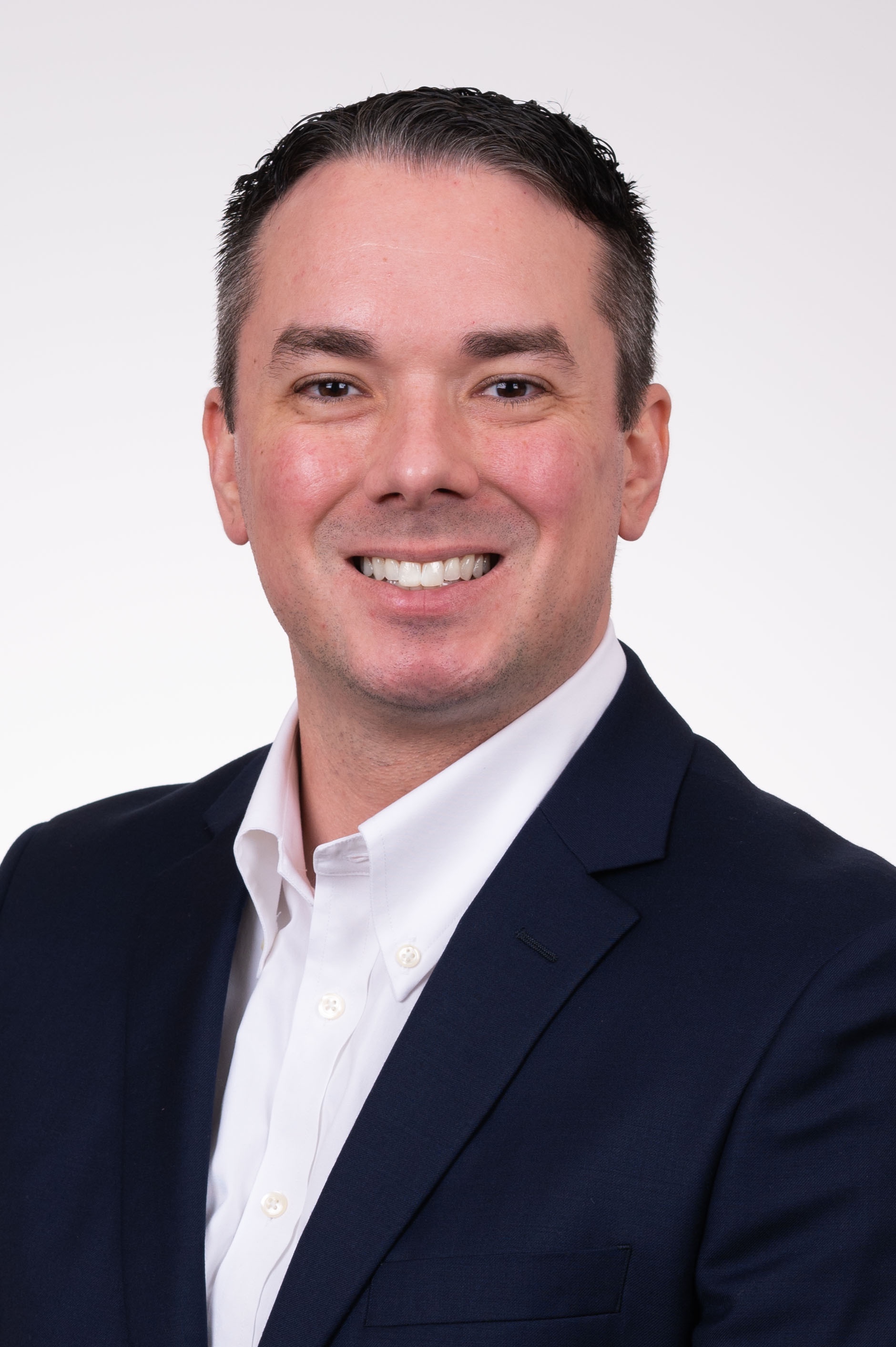
PM&R Physician
Dr. Eubanks is board certified in Physical Medicine and Rehabilitation (PM&R). His clinical practice focuses on the comprehensive care of common and medically complex spine and musculoskeletal disorders using team-based rehabilitation, lifestyle medicine, patient education, non-surgical interventional procedures, advanced imaging and diagnostics, including electrodiagnostics with a focus on optimizing function and health across the lifespan in adult and pediatric populations.
After graduating from Furman University in Greenville, SC, he received his medical degree from Brody School of Medicine at East Carolina University, graduating with Distinction in Research. He completed his residency in PM&R at the University of Pittsburgh Medical Center (UPMC) where he served as academic chief resident. He subsequently completed a fellowship in Value-Based Spine and Musculoskeletal Medicine at UPMC before joining the faculty at MUSC as an Assistant Professor. He maintains an appointment at the University of Pittsburgh School of Medicine as a Clinical Assistant Professor in the Department of PM&R. Dr. Eubanks also has a Master of Science (MS) in sports science and rehabilitation. He is working on a PhD in rehabilitation medicine focusing on Prehabilitation in Spine Surgery at Maastricht University in the Netherlands under supervisor Rob Smeets MD, PhD (Maastricht University), and co-supervisors Michael Schneider, DC, PhD (University of Pittsburgh), and Richard Skolasky, ScD (Johns Hopkins).
Dr. Eubanks has presented nationally and internationally on a n…Read More